
by Ian Hamilton (He/Him)
Nations across Europe are all facing a similar trend. Growing Immigration figures have
become a political discussion point which is of great concern to many voters. Those on the
far right are offering up radical ideas to solve the issue and Germany is no different. Last
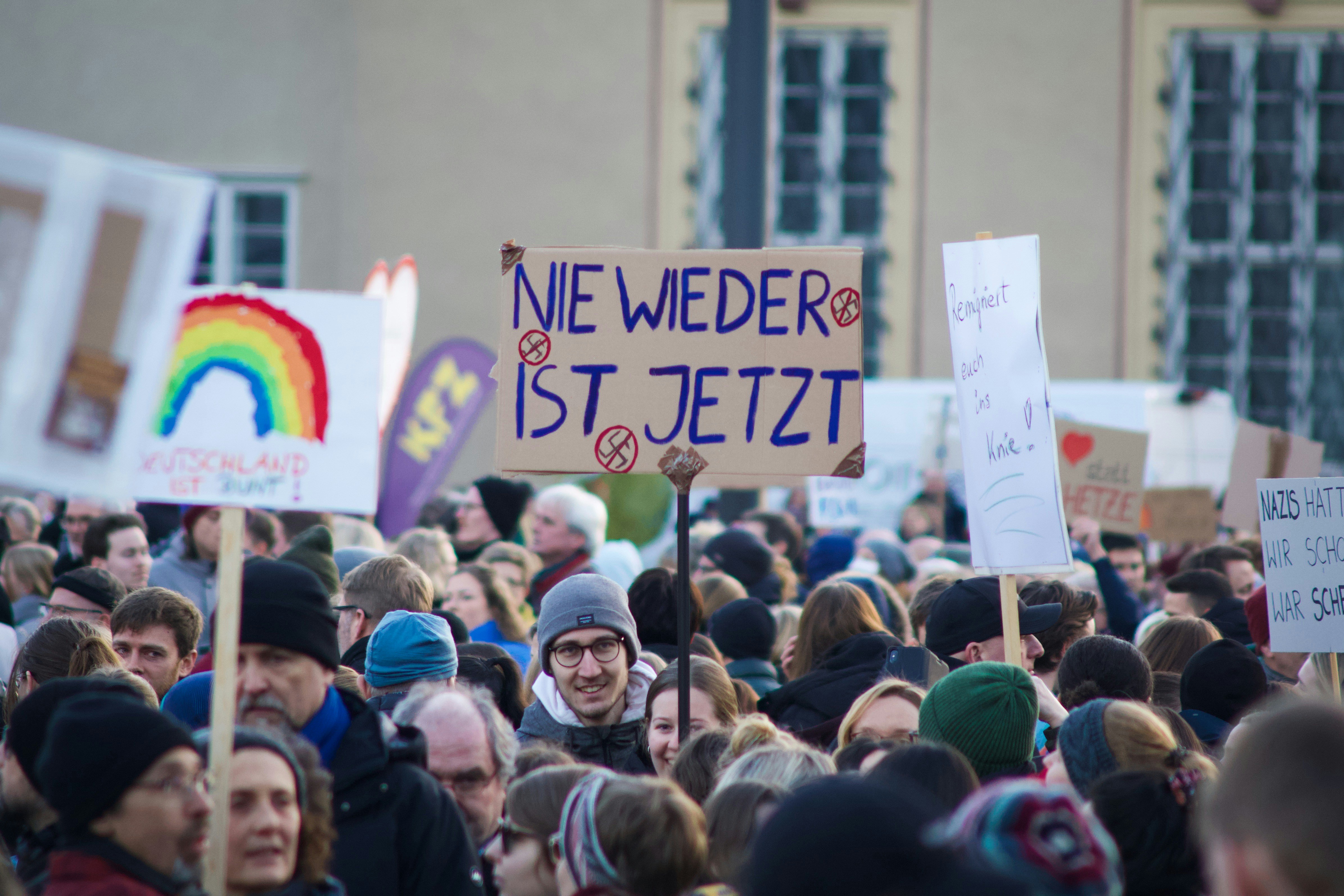
week more than 300,000 people joined protests against the flagrant excess of right-wing
extremism. Now the country finds itself at a political crossroads: Do they ban the far right
Alternativ Für Deutschland (AfD), which is currently polling second in Germany’s national
polls?
Protests broke out after news that senior figures in the AfD had met with neo-Nazi
influencers and other far-right extremists outside Potsdam to discuss mass deportation. For
many, the idea is reminiscent of the rhetoric of the past and causes great fear of the direction in which Germany, and other European nations are headed.
Among those that attended was Martin Sellner, a leader of Austria’s Identarian movement,
who discussed his theory of remigration which suggests deporting those with any migrant
heritage. A concrete meeting and plan which held many resemblances with the Nazi’s final
solution in 1941.
The biggest marches took place in Berlin, Cologne, and Bremen; with protests in Munich and Hamburg called off after 100,000 arrived in the cities. As politicians, football coaches and church officials took to the street alongside the public, banners reading “Nazi’s, no thank you” and “defend democracy” highlighted a clear stand against far-right ideology re-emerging in Germany.
German Chancellor Olaf Scholz, who joined the protests said plans to deport immigrants and citizens alike was “an attack against our democracy, and in turn, on all of us.”
The AfD has been steadily growing support since its inception in 2013, in which it aimed to
fight for nationalist causes. However, each time the party has elected new leaders, it has
become further radicalised from the respectable and moderate professors who formed the
party.
Support for the AfD had reached an all-time high of 22 percent prior to the protests, as it
became the first far-right party to be elected to the Bundestag in 2017 since the 1950’s. But
debates have now surfaced suggesting the party should be banned.
Constitutionally, banning the party is possible. Having been done before, parties such as the communist party and the socialist Reich party have been removed from the political system.
However, the mechanism to do so is complex and involves proving the whole party is
unconstitutional and seeks to undermine and abolish the free democratic state. A difficult
accusation to label the AfD with since it is a broad party which contains both those which the courts have declared neo-Nazis and those who simply hold right-wing views.
The decision to ban a political party simply because of their views also threatens the idea of
democracy. With a substantial rise in their vote share, typically by those who feel
disadvantaged and attracted by the culture wars pushed by the right, Scholz has come out
against an outright ban.
The centrist politics of dominant political figures including Angela Merkel, who, during the
peak of the 2015-16 migrant crisis, welcomed more than 1.2 million migrants without
discussion of anti-immigration sentiments may also have caused a rise in support for the AfD as voters turn to those with charisma and tough measures.
The far-right continue to grow in global politics with a major shift to the right expected in
many of this year’s elections. As Germans prepare to head to the polls in Eastern Germany
for the regional elections, results will show how damaging this episode has been for the AfD. Discussions that would have been once deemed out of bounds only a few years ago in liberal democracies have now become acceptable in political debate.
Leave a Reply