
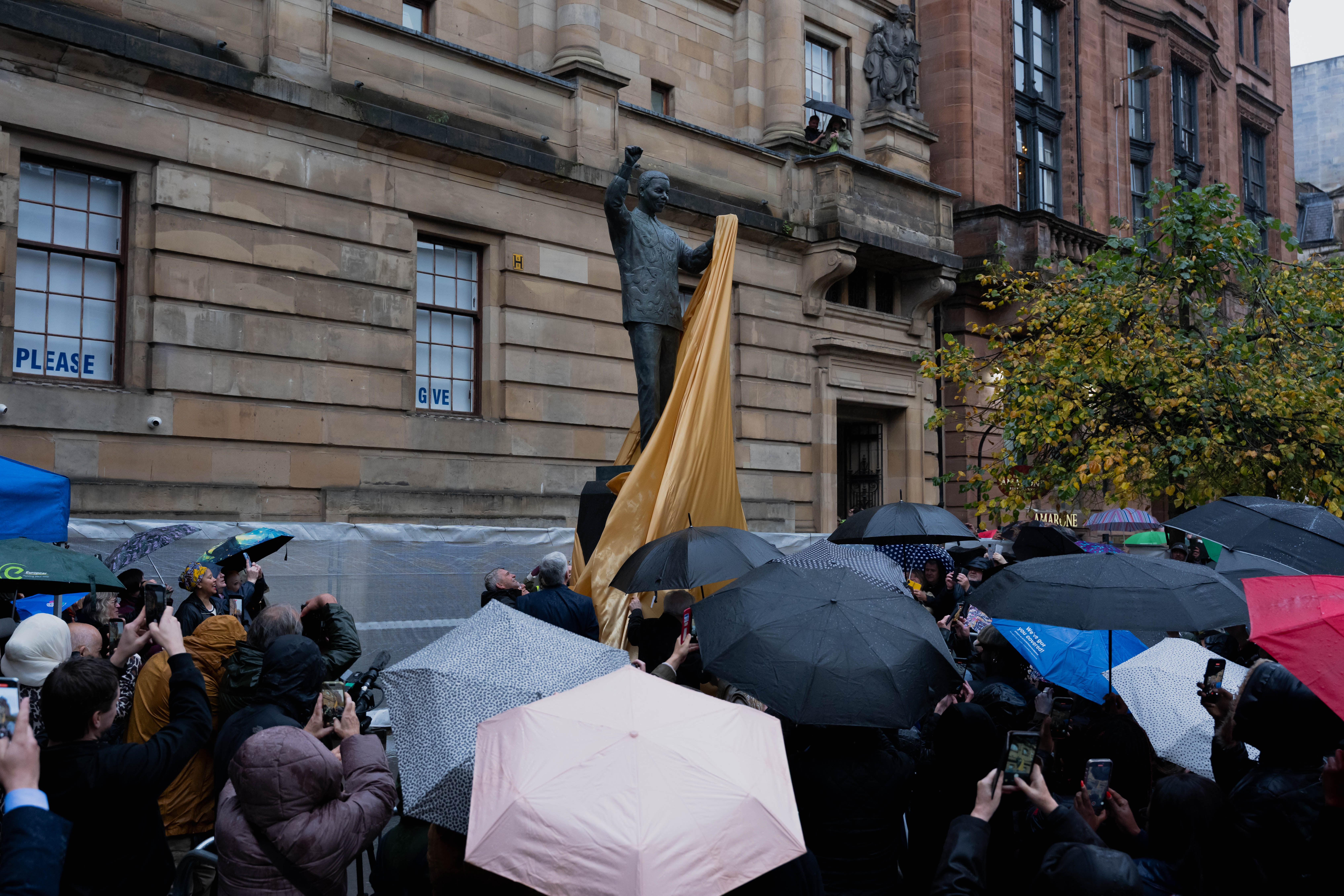
A statue of Nelson Mandela is unveiled by representatives from the Nelson Mandela Scottish Memorial Foundation.
Image: Jason Fong / Strathclyde Telegraph
In 1981, Glasgow was the first city in the world to award Nelson Mandela the freedom of the city. Imprisoned for his leadership and involvement in the Anti-Apartheid cause in South Africa, the people of Glasgow supported his desire for equality, justice and freedom.
In 1986, Glasgow changed the street name from St George’s Place to Nelson Mandela Place, renamed due to the South African Consulate was located in the building there, meaning any document, letter or request sent to them would have Nelson Mandela’s name written on it. A steady and constant reminder of the actions they were committing.

In 1993, on the 9th of October, Mandela speaks to the swaths of people in George Square after his release from prison on Robbins Island. 15,000 Glaswegians in attendance. Ringing out in front of Glasgow City Chambers in his acceptance speech: “While we were physically denied our freedom in the country of our birth, a city 6,000 miles away, and as renowned as Glasgow, refused to accept the legitimacy of the apartheid system, and declared us to be free.”
Now in 2026, a statue designed by renowned sculptor Alan B Herriot, Nelson Mandela stands on South African Granite. Unveiled in Nelson Mandela place, forty years since it was renamed and on the same day that he visited Glasgow in 1993.

There is a sense of pride shared by Glaswegians when it comes to our past, our reminiscence of a time when Glasgow was more of a community, when it was cleaner and when it was kinder.
However, it is easy to get caught up in the bad news of the city, the aspects that are constantly reflected and flung back at us. The crime, the high streets, the decline. These are important factors; there is no denying that.

Credit: Jason Fong / Strathclyde Telegraph
But, in a time when the world was silent on supporting Nelson Mandela, Glasgow was not. Glasgow fought, Glasgow shouted, Glasgow spotted the injustice and engaged. Glasgow with its community made a difference.
This statue will be a reminder of an important figure in world history and Glasgow’s history. It will also serve as a visual reminder that the people of Glasgow stand against hate, bigotry and injustice, and when they do so, the impact spreads far.


Hi, I’m Erin. I’m currently studying English and History. She/her
Leave a Reply