
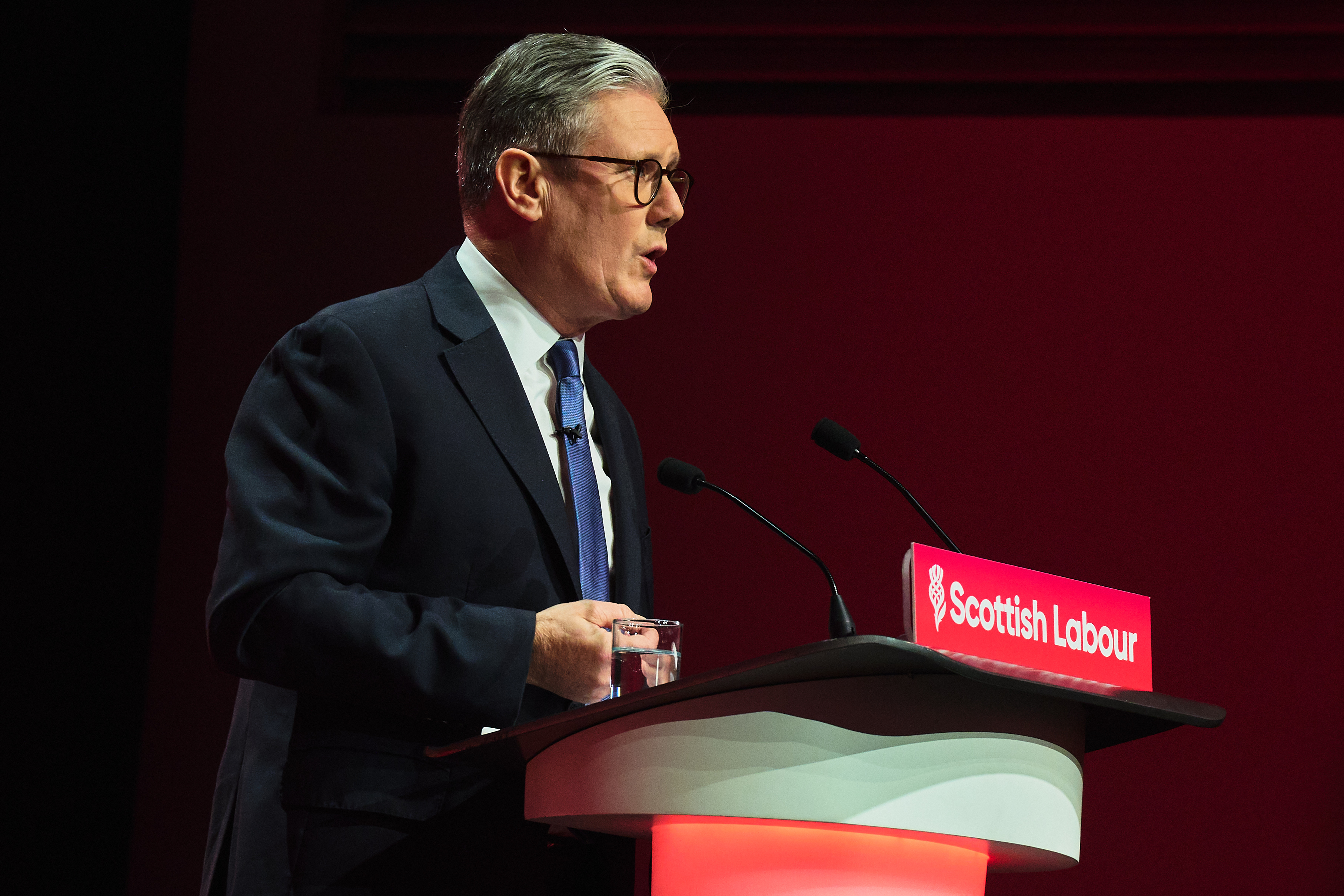
Britain’s PM Keir Starmer delivering a speech during last year’s Scottish Labour party conference.
Photo: Jason Fong / Strathclyde Telegraph
Ten years after the Brexit vote, Britain has seen a rapid turnover of prime ministers, raising questions about leadership, political pressure, and the future of Westminster stability.
Ten years have passed since the UK voted to leave the European Union, with nearly 52% voting to leave. The result marked a turning point in British politics, the beginning of a decade of political instability defined by leadership changes, political divisions, and repeated promises.
In the aftermath of the EU referendum result, David Cameron resigned after six years in Downing Street, the last long-serving Prime Minister.
“I was absolutely clear about my belief that Britain is stronger, safer and better off inside the EU. I made clear the referendum was about this, and this alone, not the future of any single politician, including myself,” Cameron said in his resignation speech.
“But the British people made a different decision to take a different path. As such, I think the country requires fresh leadership to take it in this direction.”
Cameron’s resignation set a pattern with prime ministers entering office promising to deliver change, only to leave after facing political divisions or public dissatisfaction they were unable to overcome. In the years that followed, several prime ministers would leave office under similar pressures, raising questions about whether resignation has become an increasingly immediate response to political crisis in Westminster.
Unable to deliver Brexit and facing growing divisions within her own party, Theresa May resigned less than three years after entering Downing Street. Her successor, Boris Johnson, secured a landslide Conservative victory in 2019 with the promise to “get Brexit done”, but his premiership was later undermined by internal controversies, including the Partygate scandal, which ultimately led to his resignation.
His successor, Liz Truss, lasted only 49 days in office after her government’s mini-budget triggered turmoil in financial markets and damaged confidence in her economic plans. Her rapid departure became a symbol of the wider instability that had come to define Westminster.
Rishi Sunak entered Downing Street promising to restore competence and stability after the turmoil of the previous years. However, his government struggled to rebuild public confidence. Policies such as welfare reforms aimed at increasing employment among people on long-term sick leave, alongside the Rwanda migration plan, became highly contested issues and contributed to ongoing debates about the government’s priorities.
After years of Conservative governments under ever-changing prime ministers, Sunak’s decision to call a general election – captured in the defining image of him standing outside Downing Street in the rain – came to represent a country ready for political change.
Labour’s landslide victory appeared to offer a new beginning, with Keir Starmer taking control of a country searching for stability.
Less than two years later, that promise of stability has been interrupted once again by the resignation of another prime minister.
“The question my party is asking now is whether I am best placed to lead us into the next general election… I accept that answer with good grace,” said Starmer, as he confirmed he would step down as Labour leader.
Is Britain’s political instability the result of Brexit, a failure of leadership, or a political culture where prime ministers are increasingly unable to survive public pressure?
The rapid turnover of prime ministers has become a defining feature of British politics since the Brexit referendum.
Responding to Keir Starmer’s resignation, Liberal Democrat leader Ed Davey argued that voters had become frustrated by what he described as an “endless merry-go-round of Prime Ministers”, warning that changing the person in Number 10 would not be enough without wider political reform.
“The British people are sick of being let down by an endless merry-go-round of Prime Ministers while nothing really changes for them,” Davey said.
His comments reflect a growing argument that political instability is no longer only about the personalities or decisions of individual leaders, but about a system struggling to respond to public expectations. Each new prime minister has entered office promising renewal and stability, yet has faced the same challenges of declining trust, internal party divisions and pressure for immediate results.
Andy Burnham, Makerfield MP and former Greater Manchester Mayor, is most likely to be the next occupant of Downing Street.
However, the question remains whether any individual leader can fully resolve the deeper instability that has shaped British politics over the past decade.
It may be that the problem of continually changing leadership lies not solely with the individuals in office, but with the political environment they inherit. The post-Brexit era appears to demand leaders with clear long-term vision, yet provides little patience for the time such visions require to take effect.
As a result, the challenge facing Britain may be less about who leads and more about whether Westminster itself can sustain leadership long enough for stability to take hold.

Hi, I am Julia Braun Raven, an award-winning student journalist, having been named Arts Writer of the Year at the Herald Student Press Awards 2026. Following this achievement, I am continuing to develop my journalistic skills and contribute to The Herald’s arts and culture section under the mentorship of Arts Correspondent Brian Ferguson.
I am a third-year Journalism, Media & Communication and English & Creative Writing student. I was re-elected as Editor-in-Chief of the Strathclyde Telegraph for 2026/27. Alongside preparing for the new academic year, I am delighted to continue working with the team to create a student newspaper that reflects student life on campus, while also covering the wider issues shaping the world around us.
Leave a Reply