
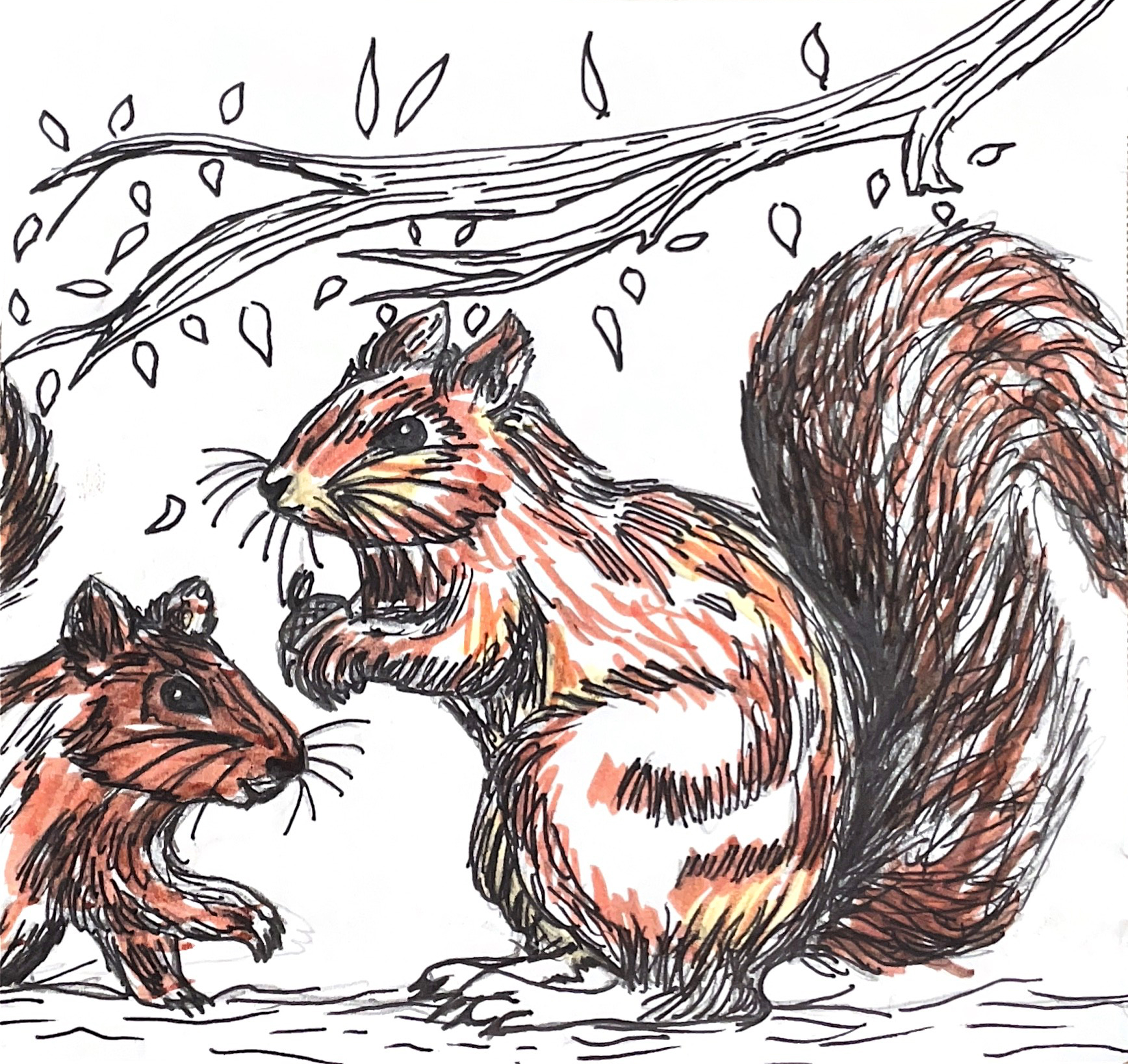
illustration: Aoibhin Pearce Glynn/ Strathclyde Telegraph
Out of all the woodland creatures, I’d have to say squirrels are a cut above the rest. They’re comical, they’re harmless, but most importantly, they’re ridiculously cute. Unfortunately for the native reds, they’re being bullied out of the country by greedy greys, which explains why it took me 17 years to encounter one. I’d say it’s time to show the reds a little love this summer; saving a life and having it also be Instagram worthy is rare, so why not grab the opportunity with both hands while it’s there?
Despite being more common, it seems grey squirrels aren’t winning popularity contests any time soon. I decided to conduct my own research by sending out a survey, which received 64 responses from students across the country. As this pie chart shows, the overwhelming majority of responders have a red squirrel preference…no wonder the greys are upset.
The red squirrel’s popularity could be for several reasons; they’re the native species, they’re cute, 87% said the squirrels they’re seeing in their local area are grey…I could go on. If anything, this data made me more determined to spread some red love. Henceforth, this article is also a campaign to get as many people inspired to see a squirrel this summer as possible.
It was at this stage that I decided I should recruit some experts. That is how I got in touch with Molly Martin, who works as the communications and engagement officer for Saving Scotland’s Red Squirrels, a project which aims to eradicate grey squirrels from where they’re threatening
to replace reds across the country. Molly’s job is to raise awareness of the amazing groundwork she and her colleagues are doing. Here are some of the interesting facts she was happy to
share with me.
What is impacting red squirrels?
“Once a grey squirrel population has arrived in an area, they can completely replace the red squirrels there within 15 years. It’s really quick, because they just take all the resources and breed, and make it so red squirrels can’t live and breed there.”
You may have already guessed it, but as Molly says, the number one threat to our indigenous reds is those pesky greys. 80% of the UK’s red squirrels can be found in Scotland, but their numbers are falling here too.
Grey squirrels were brought in by nature’s worst enemy back in Victorian times. Humans imported the cute North American rodents to Britain and used them to decorate the gardens
of the wealthy. And very soon, these bigger, tougher greys, living at their high population densities, started to outnumber the reds.
Famously, all squirrels love a tasty nut, particularly a deliciously ripe acorn, like Scrat from the Ice Age films. Both red and grey squirrels eat and enjoy nuts, so you may be wondering why I’ve only been fat-shaming the grey ones. Well, this is because, through no fault of their own, they have a different digestive system, meaning they can eat acorns before they’re ripe, leaving the poor little red sweethearts to go hungry.
If starving them wasn’t bad enough, grey squirrels also carry a disease called squirrel pox. If a red squirrel contracts the disease, they may become lethargic, with scabs and ulcers around their body. It is, of course, incredibly painful for the animals and is fatal within two weeks. The mortality rate for the native squirrels is 100%.
Climate change is also a killer, as changing seasons impact when food is available and how much of it the squirrels can access. Extreme weather conditions have a similar effect; for example, if a storm occurs, squirrels may not be able to go foraging.
Between humans and greys, reds hardly stand a chance. Grey squirrels are helpless to the harm they cause, which is why it must be up to us to make Scotland safe for squirrels again.
What can we do to tackle these issues?
“Recording your sighting on our website of both reds and greys is really important, and it does feed into our work, so that’s a way you can get involved with the project wherever you are in Scotland.”
If you’d like to show the red squirrels some love, then the best thing you can do is work with Molly and her team in tackling the growing grey number. After seeing a squirrel, whether it be red or grey, the best thing you can do is report your sighting on the Saving Scotland’s Red Squirrels map.
The map is used to locate where red and grey squirrels are in the same area, which are the same places the organisation will focus their work. This data has been collected since 2009, helping the team to track how their work has moved or changed populations. Molly told
me about the example of Aberdeen, where two dogs have recently been trained to sniff out grey squirrels without causing harm.
“When we first started, it was almost all grey squirrels that were being sighted, and now, almost 15 years later, it’s almost all red squirrels being sighted in the city, and that’s because of our work, so it’s really important for people to tell us when they see reds and greys.”
Other advice Molly gave me was not to feed squirrels, particularly greys, as it only benefits them, making it harder for the red squirrels yet again. So long as sightings are recorded, the team can make a safe environment for reds, allowing them to naturally take over their rightful land.
Where can we see a squirrel?
“If you sit still for 20 minutes, then the wildlife in that area kind of accepts you…they’re not scared. And that’s when you’re more likely to see everything, not just squirrels.”
Finally, some good news for the red squirrel appreciators! Contrary to what some might think, squirrels aren’t ones for hibernation. Although if it’s wet and cold, they’re more likely to hunker down and stay sheltered. A bit like me.
The best time to see the little cuties is during mornings and evenings, especially in autumn, when they’ll be gathering nuts from the forest floor. As for locations, you might get lucky while walking through woods and forests, in places such as Loch Lomond, Dumfries and Galloway, or Inverness. To be in solidarity with the reds by not having a chance to see a grey at all, The Highlands have no grey squirrels, so you’re guaranteed to at least see a dash of red fur as they jump through the trees.
If you stay still, quiet, and let yourself peacefully embrace nature, you might get even luckier with a longer sighting, as well as gain a trusting squirrel friend. What more could you possibly want from life? As far as my research goes, I’m sure our native red friends would appreciate the extra help, so long as you can refrain from cuddling one to death.
With the Scottish summer fast approaching, you’ll likely be looking for something to do to fill the delightful break from assignments. Scotland is such a beautiful country, with wildlife and views which can fly under the radar because of our usual horrific weather. So, if you catch a free sunny day, use that rail discount and free bus travel to see some of these scenes for yourself. Embrace the muddiness, the hay fever, the ankle-breaking trails, take some photos of these red little fellows, put them on the map, and help them reclaim Scotland as their home.

Culture Editor for the Strathclyde Telegraph 2026/7
Leave a Reply