
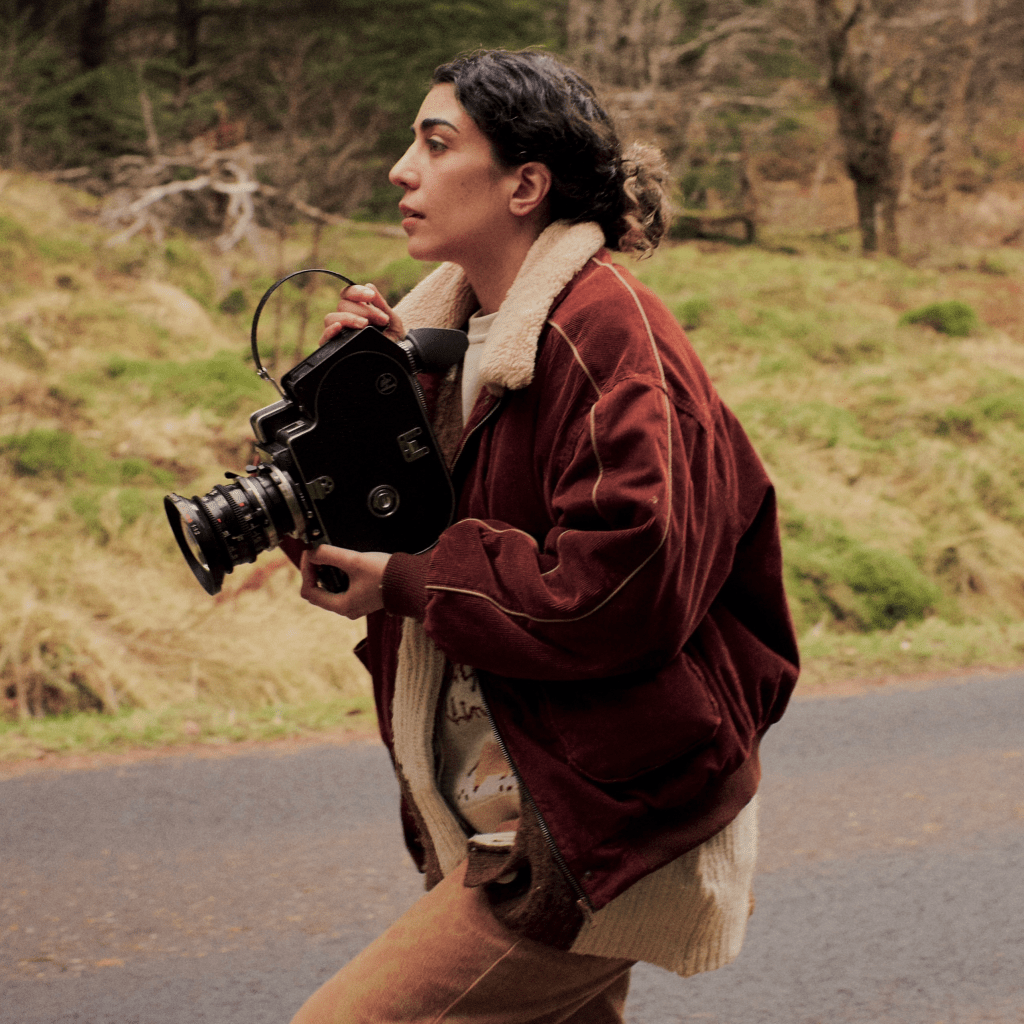
Originally from a small town in Northern Italy, Debora Bottino moved to Scotland almost 10 years ago and has since dedicated her time to growing as a filmmaker.
“I started making films when I worked in museums, so they were mainly for galleries,” she explains. Since her studies at Screen Academy Scotland and San Diego State University, Bottino has further immersed herself in the Scottish film-making scene, working as part of the creative team that refurbished the Burrell Collection in Glasgow and developing a diverse collection of short films that have been watched and distributed internationally.
Bottino is involved in Glasgow Film Festival’s New Talent Mentorship Scheme, a six-month-long initiative aimed at providing emerging screenwriters, directors and producers with professional support and training. Having been paired with filmmaker Charlotte Wells, best known for Aftersun, Bottino is eager to soak up all she can from the experience. “It’s incredibly exciting, but also nerve-wracking,” she admits. “I feel like we’re very similar in the ways we approach filmmaking and the type of stories we’re interested in telling. I’ve really admired her work since the early shorts she made, so I’m very much looking forward to it.”
Currently in the early stages of writing her debut feature, Bottino shares her ambitions for the project: “It’s a work-in-progress. There is a twist of eco-anxiety and a twist of kind of coming-of-age in your late 30s, so it’s a mix of themes.” Whilst optimistic that the project will be a unique and refreshing addition to her already impressive catalogue of short films, she is looking to her main thematic influences thus far to keep her work cohesive. “My work relies a lot on womanhood in rural communities; that’s my main kind of focus for every single story I’ve been putting out. I like to tell character-driven stories of misplacement and longing with a slice-of-life feel, and with a twist of madness, sometimes,” she laughs.
On why these themes are so prevalent in her work, Bottino cites her personal experiences with them: “I think it’s mostly from my background. The rural side of it is because of the way I grew up, and the way it kind of shaped my creativity, the way I express myself and the way I look at the world around me.”
Bottino’s most recent documentary, Seeking Comfort in an Uncomfortable Place, follows three neurodivergent skaters, exploring how skateboarding can be a means of self-expression and the benefits that finding a like-minded community can have. As someone on the autistic spectrum herself, Bottino finds showcasing areas that are typically underrepresented in mainstream media especially important: “I was looking for outlets and for other people, just anyone out there that experienced the same things as me. That kind of inspired me to make documentaries around it, even in practices I wasn’t really involved in.” She goes on: “Neurodiversity is so under-researched, especially in women and non-binary folks, so it helps to have validation from peers and to find this [as a source of] motivation.”
This focus on the positive impact of finding a community is something that Bottino wanted to mirror in her creative process, too. “Since working with that community, I decided that my work had to be more collaborative,” she revealed, giving insight into how this has affected her final drafts: “In every frame that has been edited, or in every single colour patch within that frame, I think there is something of every person who has worked on it. I like that as a tapestry rather than just an undefined item. That’s what makes it so special.”
As for finding visual inspiration, Bottino doesn’t shy away from any of the mediums available to her. Besides keeping a list of her favourite filmmakers, noting recent films she enjoyed and creating mood boards, she is looking for new creative references everywhere: “Visual inspiration can come from anything, I think, from paintings to the way certain poems are written to some archaic photography you find in flea markets. I think if you really look for it, you can find inspiration even on advertising on motorways.”
Having spent much of her time travelling in recent years, Bottino finds that the different cultures and creative approaches she has encountered have helped shape her work. “When I was studying in San Diego, I felt like that was moulding the way I was approaching filmmaking, just because I was in contact with so many different people,” she explains. “I’m finding inspiration in the everyday when that everyday is always changing, and when you’re travelling it becomes even more stimulating to think about all the bus conversations you can eavesdrop on or all of the walks in the park people-watching. It feels pretty natural.”
Upon looking to the future, Bottino is clear on how she wants her career to progress. “Every filmmaker – or at least every filmmaker I know – wants to be watched,” she explains. “There is this impending need to have an audience, even the smallest audience you can imagine. I think that’s my highest aspiration at the moment – making things that can circulate into festivals.” With a quick assessment of the artistry that Debora Bottino has demonstrated to date, one can’t help but feel like this dream is not so far out of reach at all.
You can follow Debora on Instagram @johnwillbarry and look at her website here.

Editor-in-Chief.
Fourth year English and Creative Writing and Politics and International Relations student.
Leave a Reply