
Written by Joseph Ellis & Rashmii Sharma
United Nations researchers have highlighted how the globe is shifting into an era of ‘global water bankruptcy’ with many regions facing persistent water shortages. Much of the media, political, academic and scientific institutions understandably focus on developing nations as they may be most severely affected. However, it is important to remember that the developed world cannot escape these problems, purely through having a higher GDP.
Lundy, an English island in the Bristol Channel, recently entered British headlines over its water shortages. Famed for its puffins, the seemingly idyllic location is at risk of becoming uninhabitable for humans expecting the usual comforts of life in modern Britain. Reports of no flushing toilets and rapid showers show that life on Lundy is fast becoming very different.

Image Credit: Walkopedia.net
Part of the reason for the challenges on Lundy being so severe is due to the geography of being a small island. The logistics of moving water from the nation’s large reservoirs are obviously far more complicated and financially draining for small islands. While Lundy has a very small permanent population (it does attract many short-term visitors), concerns for other small British islands with larger populations may be growing.
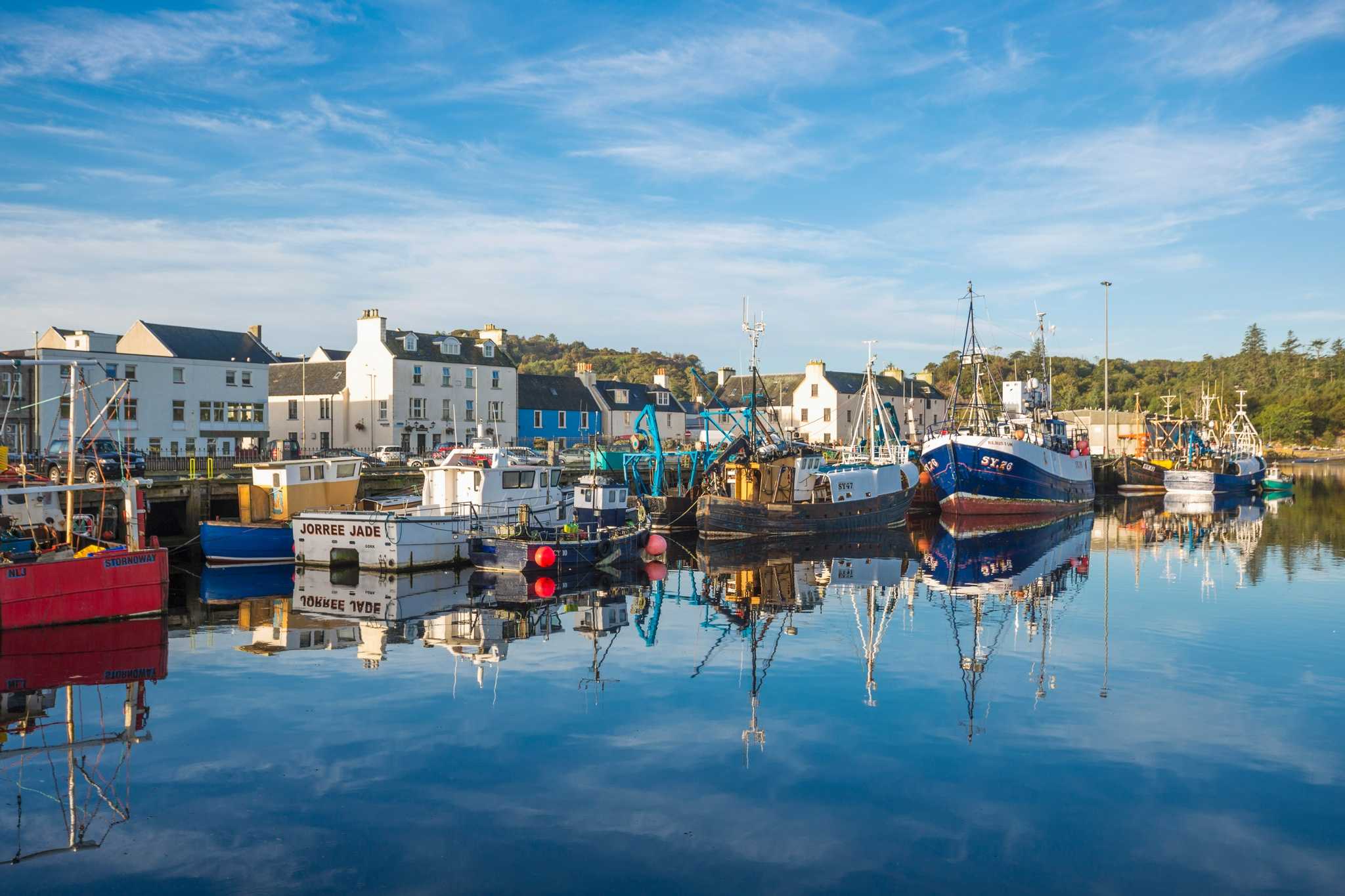
Many of the Scottish islands have communities that have been there for many centuries, and they continue to enjoy distinctive ways of life that separate them from the mainland. For instance, the Isle of Lewis in the Outer Hebrides remains a stronghold of Presbyterianism and therefore, it continues to maintain strict Sabbath shop closures. Also, Gaelic remains far more widely spoken on some of the islands than the mainland. These traditional ways of life may be increasingly under threat if water shortages make life impractical for these more isolated communities.
Whilst these islands are home to a small population, it does not mean a low water demand. Besides household consumption, agriculture, tourism and local businesses all depend on reliable water supplies. Many island economies also experience significant seasonal population increases, placing additional pressure on existing infrastructure.
The Scottish Government’s own 2026 Climate Change Plan recognizes that increasingly frequent and severe summer droughts could create difficulties for water quality and supply in Scotland’s islands.
Tourism was specifically identified as a challenge by Scottish Water for smaller communities. Its research indicates that some island populations increase by four or five times during the summer tourist season. It provides an example of a community of 500 people potentially experiencing an increase to 5,000 people during a major visitor event.
For communities such as the Isle of Harris and Lewis, the implications are especially important. Water security is connected to the continued viability of communities that have maintained distinctive culture traditions, local industries and Gaelic-speaking populations over many generations.
Out Skerries, Shetland’s eastern most islands, faced a water shortage crisis during summer 2025. Following an extended period of very little rainfall, Scottish Water organized an emergency operation involving three deliveries to the islands. These deliveries transported 242 cubic metres of treated drinking water and a further 1,500 cubic metres of raw water. The operation required a specialist well boat, temporary pumps and approximately 600 metres of temporary piping with each journey taking around 10 hours.

Image Credit: Julian Paren
The Scottish Government are in the midst of implementing long-term strategies to tackle further water scarcity crisis. An important part of Scotland’s water policy actions is the Scottish Environment Protection Agency (SEPA), which is responsible for monitoring water scarcity and managing the environmental consequences of prolonged dry weather. This monitoring system is supported by its Drought Risk Assessment Tool, that provides information about river flows and the duration of unusually low water levels.
The Scottish National Adaptation Plan Annual Report provided evidence of increased coordination between government agencies in their 2025-26 report. During the 2025 water scarcity period, Scottish Government officials met weekly with SEPA, Scottish Water and other relevant stakeholders. This was supported by weekly water scarcity monitoring and management reports over 28 consecutive weeks.
Whilst such coordination is encouraging, monitoring is only one part of effective preparedness. Ultimately, the Scottish Government’s preparedness for water scarcity on its islands remains a question of long-term resilience rather than simply emergency response.
Recent figures emerging from Scottish Water found that average water storage across Scotland stood at 83%. Regional differences arose with West Scotland standing at 88% while East Scotland dropped to just 70%, eleven points below its seasonal average
The Government has established a framework for responding to water scarcity, but the extent to which it translates into lasting security for Scotland’s islands remain uncertain. The experience of Lundy should therefore serve as a warning: Scotland has an opportunity to address these vulnerabilities before water scarcity becomes a more persistent threat to the future of its island communities.
Leave a Reply