
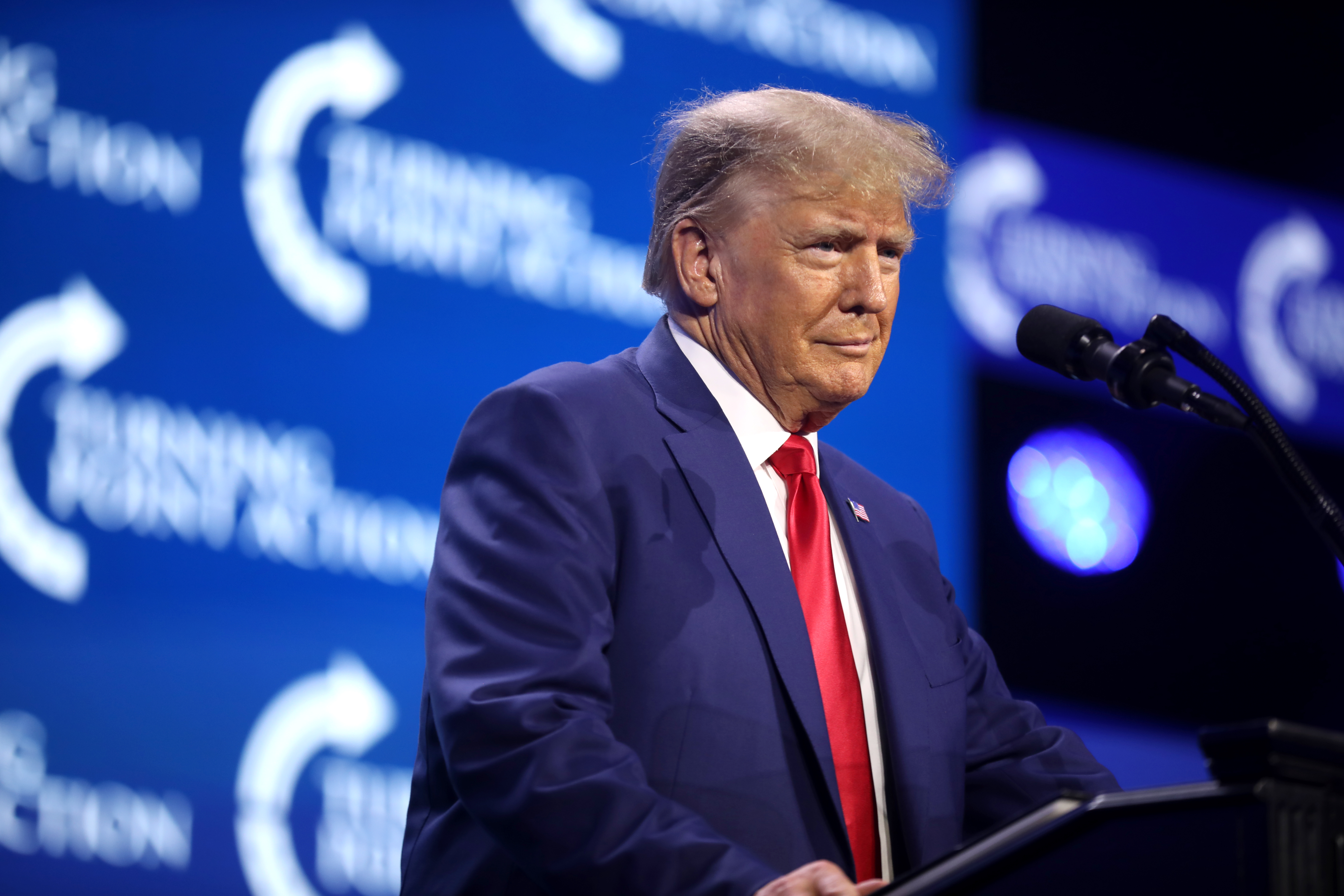
Gage Skidmore from Surprise, AZ, United States of America, CC BY-SA 2.0, via Wikimedia Commons

Democrats have won control of both chambers of the US Congress, giving Donald Trump an opposition legislature for the final two years of his presidency. The Associated Press called the Senate on election night, 3 November, and the House early the following morning. Some individual races remain unresolved, but the question of which party won control has been answered.
Those calls are news organisations’ assessments of the results, rather than official certification. The incoming congressional terms begin on 3 January 2027. Until the transition, the current Congress remains in place.
For people watching from Scotland, American elections can feel like a choice between celebrating one party and fearing the other. I think there is another question worth asking: how much power should either side have when it wins?
Trump will still be president. Losing congressional support does not remove his veto. Overriding it requires two-thirds of those voting in each chamber, provided a quorum is present. Democrats cannot simply pass their programme as though the White House has changed hands too.
The Senate also has its own obstacles. Ending a filibuster on most legislation normally requires 60 votes, although there are important exceptions. A majority gives a party influence over the agenda. It does not guarantee that everything on that agenda becomes law.
Congress can nevertheless place meaningful pressure on a president, particularly through funding decisions and oversight. How far that pressure succeeds depends on political choices and the administration’s response. Pre-election analysis from Chatham House warned that investigations can consume time without necessarily delivering concrete results.
That is where my sympathy for divided government comes with a condition. Scrutiny should uncover evidence and make officials answer for their decisions. If it becomes mainly a performance for the next campaign, the public gets noise while the government carries on.
Scotch whisky provides a direct reason for us to pay attention. The US was Scotch’s most valuable export market in 2025, worth £933 million. Decisions in Washington reach businesses and workers here.
According to the Scotch Whisky Association, Scotch exports to the US fell by 15% in volume and 7% in value during May to December 2025 compared with the same period a year earlier. The association attributes those declines to the 10% tariff introduced in April 2025. That is the industry’s assessment, rather than proof that the tariff alone explains every lost sale.
Trump announced the removal of whisky tariffs on 30 April, following the King’s state visit. The removal took effect on 24 July. Those are different dates, and for an exporter, the date a charge actually disappears matters more than the announcement.
The UK government’s published trade guidance identifies UK-produced whisky as exempt from the additional US tariffs introduced in July. A change in congressional control does not itself rewrite that arrangement.
I welcome fewer trade barriers. But businesses should not have to build their plans around whether a president feels generous after a diplomatic visit. Predictable rules seem a stronger foundation than personal favour, whoever occupies the White House.
The same scepticism should apply to spending. I would judge the incoming majority by the commitments it approves and the costs it explains. Being the opposition does not automatically make a party careful with other people’s money.
These elections have created a check on Trump’s power. Whether that produces better government is a separate question. Democrats should face scrutiny of their own decisions, just as Republicans should. A change in who holds power is useful only if we keep asking how that power is used.
Leave a Reply