
By Julia Braun Raven and Keera Adamson
Researchers in Scotland have warned that the rapid development of artificial intelligence (AI) is unavoidable and that the Scottish Government should address the environmental and ethical risks of investing in it.
With growing awareness of the United Nations Sustainable Development Goals (SDGs), like SDG 12 – Responsible Consumption and Production, Scotland, with its abundance of renewable energy, becomes an attractive location for new data centres.
Joseph Shingleton, a research software engineer for AI at the University of Glasgow, said: “The Scottish government might think it’s a good economic opportunity to build data centres without knowing exactly what a data centre is.”
Feng Dong, head of the Human Centric AI Research Group at the University of Strathclyde, said: “Machine learning has been there for many years before it started to make this kind of big impact, as it takes advantage of more and more data available.”
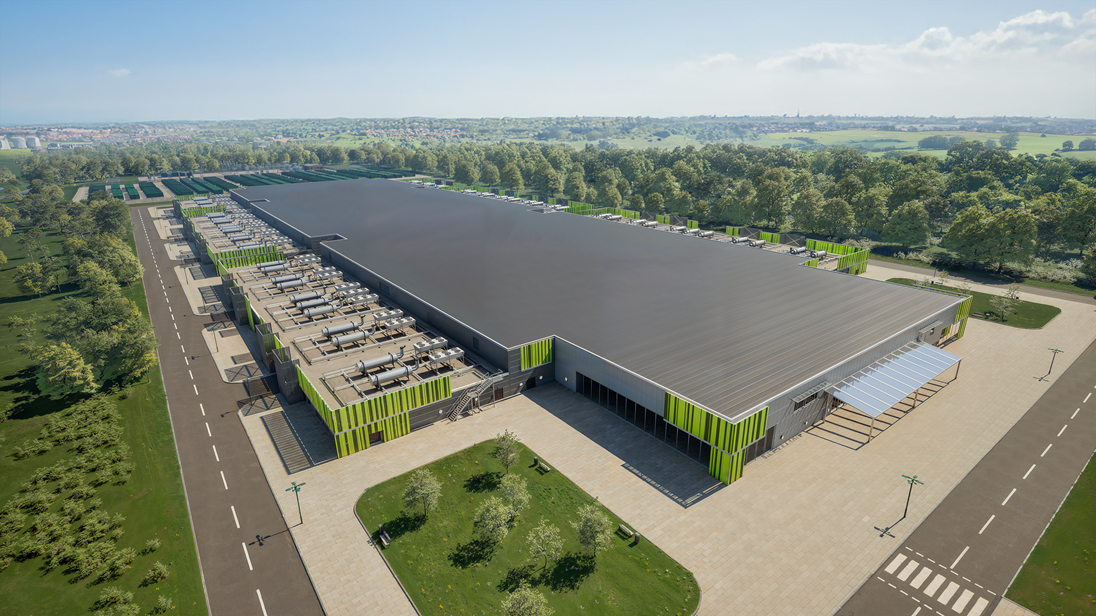
Data centres are not a new development, and AI, which is an imitation of human intelligence, was built on data stored within them. However, the fast growth of AI has created demand for facilities that can handle greater storage capacity. With it grew water and energy consumption.
James Ackland, research associate in Statistics of Missing Data, at the University of Glasgow, said: “We know that the data centres that support AI are very hungry for energy and for water.”
The massive computing power used to process data required by AI creates heat, which must be cooled down. In Scotland, as reported by the BBC, most data centres are being cooled down using open-loop systems. It is a system which uses vast amounts of water, sourced from mains, which are circulated once and then discharged. In comparison, the newer closed-loop systems recirculate the same water repeatedly and refill only the amount that evaporated.
A closed-loop system is more environmentally friendly and supposedly uses less water, but with a lack of data, it is difficult to measure its efficiency.
Ackland said: “If we don’t really know what water consumption has gone down from to… It’s quite hard to know have you made a small bit of progress, or have you made massive progress, or was there never a problem to begin with.
“We need the data to understand what it’s doing.
“Things that we found are a challenge is quantifying what those sustainability challenges look like. We know they’re there, we just don’t know how big they are,” he added.
In an attempt to access needed data Engineering Responsible AI, 2025 report called for the government to require reporting standards from data centres and AI products. These are to include information on water consumption, energy consumption, and rare earth metals.
It is estimated that typical data centres use between 11 million and 19 million litres of 12 water per day; this is the same usage as a town of 30,000 to 50,000 people.
Major tech companies such as Microsoft and Google have been consuming more water each year since 2020, having a 34% and 20% increase in usage, respectively.
BBC Freedom of Information (FOI) requests show that the amount of tap water used by AI data centres in Scotland is now four times higher than it was in 2021.
According to Scottish Water, without intervention and with continuation of extreme weather and long dry spells, this could result in a deficit of 240 million litres a day by 2050. The most impacted areas will be Edinburgh, the Lothians and Fife.
“I would definitely be concerned with putting them (data centres) in areas where there is drought risk,” said Shingleton.
Makenna Hopwood, project manager and research scientist at the University of Glasgow, said: “People don’t necessarily understand the impact that it has on the environment.
“The negative environmental impact is coming from the low stakes use of AI and not the use of it for research aspects of things… if the public had more education on what they were doing when utilising it, maybe they wouldn’t use it as often.”
Data centres in Scotland can be found across the central belt, Glasgow city centre, Chapelhall, Hamilton, Renfrew, Livingston, Edinburgh and Aberdeen. There are more hyperscale datacentres planned, including Apatura’s in Ravenscraig, at the former strip steel mill site, and ILI Group’s – named after Stoic philosophers – Cato in Fife, Rufus in East Ayrshire, and Aurelius in North Lanarkshire.
Ackland said, “The reason that we’ve seen lots of data centres built in Scotland is that it’s a good place to pitch yourself as being a sustainable data centre.
“Because of either the very renewable grid or the renewable resources that you can build your own energy supply on.
“Given that, it’s data centres that want to position themselves as being green coming to Scotland, you will see innovation in the making it in the sustainability space as far as Scottish data centres are concerned.”
Shingleton said: “It’s the big tech companies that are going to do any innovation, where academia has its strongest suit … is that we can provide guidance on the ethical use of AI, the responsibilities, the explainability … we can make sure the tech companies are doing things in the right way.”
Leave a Reply