
5 November 2020, Guy Fawkes night. A close-knit village in Staffordshire, separated by heightened Covid restrictions, was determined not to let the cancellation of their official bonfire dampen the community spirit. Instead, these constraints served as a catalyst for an even more intimate celebration. Individual bonfires flickered to life in every back garden, and neighbours made toasts over their fences as the night sky was briefly brightened by vibrant explosions. In this ephemeral interlude, the town’s residents found a temporary respite from uncertainty.
Amidst the revelry, Carrie Smith, 18, stood at the heart of it all, a beacon of promise in the town. Coming from a modest blue-collar family, Carrie defied the odds stacked against her and was set to be the inaugural member of her family to go to university. An aspiring teacher, she had volunteered at numerous charities, worked several jobs, and was predicted three A* in her A-Levels. Carrie’s success seemed not only achievable but inevitable.
As the night progressed, the cheers and laughter echoing in the air, Carrie was forwarded images by several of her friends. At first, caught up in a moment of beauty, she assumed the photos were of their bonfires and took no notice. Eventually, however, she succumbed to her phone’s perpetual buzzing. Nonchalantly opening her phone and expecting to see snapshots of the shared joy, she instead became horrified to discover a link to a tweet that contained three images, each depicting her naked in front of a mirror.
Horror in the Palm of Her Hand
“Like what you see? Click the link below for more of her,” the now-suspended Twitter account published. The post had received over 200 likes and around 50 retweets in just over two hours when Carrie discovered it. Scrolling through the like and share list, her heart dropped whenever she recognised one of the profiles as a friend, co-worker, or fellow resident in the town. Horrified, she fled to her room in an attempt to distance herself from the harsh reality unfolding online.
As the last embers of the socially distanced bonfires flickered away, Carrie sat on her bedroom floor crying. It was only a matter of time until word of the images spread throughout the whole town, and the once-vibrant air of camaraderie began to sour. “Whenever I checked, the numbers were only growing, and the share count consisted of more people I knew,” Carrie, whose name has been changed for anonymity, told me. Although separated, she could feel the town’s judgment, those she grew up with turning on her.
Whilst reporting the tweet, Carrie accidentally clicked the link, and for several excruciating seconds fumbled with the buttons on her phone trying to avoid unveiling more images. Despite having a carefully curated digital life, she convinced herself she was at fault. Torn between self-blame and a desperate need for answers, her mind spiralled into a frenzy of possibilities. What if she had been hacked? Had a friend accessed her phone? The burden of uncertainty bore down on her, leading to a frantic search through her camera roll. However, Carrie still couldn’t find the elusive images circulating online.
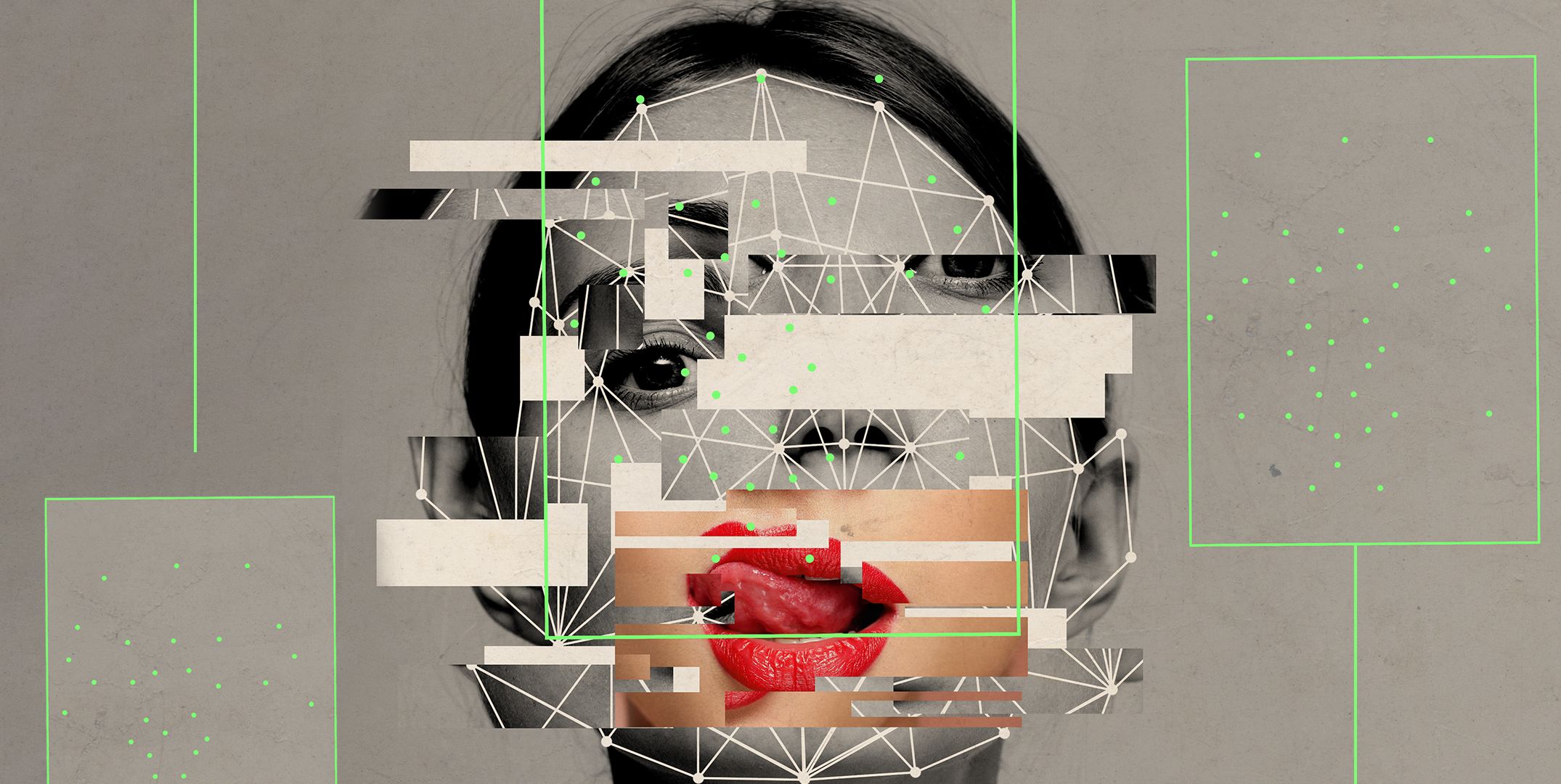
When analysing the photos, she realised something wasn’t as it should have been. “My room wasn’t right. It wasn’t mine or someone’s I recognised. There were photos [on the wall] of people who I had never met, and some writing in the background that was incoherent,” she revealed. As the pieces fell into place, Carrie was faced with a brutal truth: “It was my face on another body.” She was a target of AI deepfakes.
The Hidden Horror of AI Deepfakes
AI-generated images are becoming increasingly insidious, weaving a complex web of deception that has recently gained traction for its power to ensnare even the most renowned personalities. Celebrities such as Emma Watson, Florence Pugh and Taylor Swift have had AI-generated images published and shared millions of times, signalling a dangerous shift towards an impenetrable culture of degradation and digital violence towards women.
Carrie’s story, though initially appearing bleak and isolated, demonstrates how this phenomenon transcends celebrity status. Its victims are everyday women — mothers, daughters, and friends. According to the UK government, a website that virtually strips women naked garnered a staggering 38 million hits within the first eight months of its launch. However, in 2020, when AI deepfakes were less common, Carrie’s protests were fruitless in her town where the cacophony of judgment grew louder.
“When I was seven, I was hit by a car and knocked onto the road. I was so scared that I was going to die that I forgot how to breathe, to call for help. That’s what I felt when I saw the images.” she confessed. “My life was essentially over.”
Carrie found herself stripped of her once pristine reputation: a Van Gogh without paint, a Ferrari without fuel. What was once the driving force behind her achievements and motivation for future success had quickly crumbled beneath her. “It felt like everything I had done in my life had all come to nothing.”
Discovering that these photos were not genuine did not soften the blow Carrie received when she first discovered them. “I felt even more disgusted when I found out it was AI-generated,” she told me. “Someone went out of their way to make this.” The perpetrator chose a body that was believably Carrie’s, that ‘suited’ her, seamlessly blending her face into the body and blurring the background so it became unidentifiable. They even added make-up to her face to make her more ‘desirable’. Carrie was taken aback by the lengths that the creator went to: “It would be impressive if it wasn’t so fucked up.”
Friendship and Family Fractured
Following the incident, Carrie turned all of her social media accounts private, deleted any images of her and her peers, and removed any followers she wasn’t sure of. “My account has far from a big following. I only had around 200 followers at the time, and all of them – except a few dog accounts – I knew. So, unless Kinder the chocolate Labrador was the culprit, someone I knew probably made these,” she laughed, but it was a brittle sound, a feeble attempt to mask the pain gnawing at her. As far as Carrie is aware, she was betrayed, and her life was irreparably damaged by someone she trusted.
Looking back at the deepfakes and the photos of her that were publicly available at the time, she realised from the way her hair was sitting which picture was likely to have been the one used to create the images: a photo of her holding her friend’s newborn baby. A cherished photo, once a symbol of joy and affection, was now repurposed by AI into perverted deepfakes. “It made me sick to my stomach knowing that me holding her for the first time was used to humiliate, degrade, and sexualise me. This was the most painful thing about the whole experience; I would have felt at least the slightest bit better if any other photo was used.”
Carrie’s past was stolen, and the golden moments she once held dear had been tainted. Any attempt to retrieve their true essence eluded her, leaving behind a sense of irreparable loss. “I can’t look at the photos from that day anymore. When I do, all I can think of is what they were used for,” she tells me. “I feel selfish looking at a treasured moment and only thinking about myself, so I try to think about the joy that we all had. But right now the hurt I feel is much greater than that.”
Regardless of their authenticity, these images had become the brushstrokes of a new narrative that painted Carrie as an outcast within her own community. An only child, described by her parents as a “butterfly among a family of moths”, Carrie embodied her family’s hope for a new beginning. “I am the only one who could have given them a legacy, and now I have messed it up,” she explained. “Their legacy wouldn’t be a daughter who went on to teach and help children, but of a girl who had taken naked images for everyone online to see.”
The morning after these photos were unearthed, she was awoken by the sound of her mother screaming with a stricken look on her face: “I asked her if everything was okay and immediately, she said no, that she had seen something horrible on her phone.” The following encounter was one Carrie held back many details of. When describing the lines her parents aimed at her, she often had to chug her water to delay repeating their words. A conversation that left her emotionally winded, Carrie had to brace herself just to revisit it.
Reliving their dismissive remarks felt like a relentless assault on her sense of worth. Her parents, rooted in a generation less attuned to technological nuances, adamantly refused to accept the possibility that the images were the result of AI: “No matter what I said they didn’t listen. Their mind was made up – I took them, and their daughter was a slut. That’s what they called me.” While tempted to give in when she could hear the firing shots of her parents’ disapproval, to go along with the new narrative created by these deepfakes, Carrie preferred not to betray herself. Their perception of her as refusing to accept any blame only deepened their newfound disdain.
Because of someone else’s decision, Carrie’s home was now a prison. Her parents no longer saw her as a butterfly, but instead a stranger within their own walls. “My parents made sure that this would be a kept secret from my distant family,” she explained. “They would talk me up to my aunts and cousins and tell them how proud they were of me, but the second we were alone, I was nothing again.”
As much as she wanted to avoid showing her face at school, Carrie knew she couldn’t stay at ‘home’ anymore. “The first few days were the worst. I was called every name under the sun, and my friends were embarrassed to be around me, so, I was alone.” Despite the deceiving nature of these images, Carrie still felt shame: “It didn’t matter what I said, people thought they were real – so they were.”
Carrie found herself trapped within the grip of the town’s condemning whispers, a far cry from the warmth and acceptance she once knew. As the community spirit continued to thrive, conspicuously excluding her, she became further isolated. Instead of the greetings that people would make passing her on the high street and the praises of her predestined success, Carrie would find herself faced with a heckle or a laugh, often from someone she used to call a friend.
Chasing Closure in a Broken System
Over the next week, Carrie relentlessly sought avenues to get the images taken down, hoping to salvage her reputation and restore a semblance of normalcy to her life. However, legal remedies and platform policies didn’t mean much in practice, as, at the time, the laws around explicit AI-generated images were loose. The images didn’t count as revenge porn as she had not been in a relationship, and they didn’t count as child pornography because of her age. Even if the image was illegal, it would be difficult and costly to try to sue the anonymous profile who posted it.
Regardless of whether every trace of these images was removed from the internet, Carrie knew people would have them saved on their phones and engraved in their memories. “I was stuck,” she told me. “No matter what I said, people here wouldn’t forget.” She wasn’t herself here anymore, but a character that the town, that some unknown person, had made her.
To seek solace in a new environment far from the shadows of betrayal and condemnation, Carrie felt she had to leave the place she once called home. Changing all her UCAS applications from nearby universities to those outside of England, she made a choice driven by her lack of a support network. “I loved everything about this town – my friends, my neighbours. But I realised I needed to love myself more. I couldn’t spend the next three years studying at a university where word of the images could have crept up… I needed a fresh start,” she admitted. “If one person had fully backed me or believed me from the get-go, maybe I would have stayed.”
A Fresh Start, But the Past Remains
Carrie, now 21, is living in Scotland, preparing for her final year at university. Her hair is dyed a convincing brown in an effort to distance herself from the attack, and she has shed the weight of notoriety, blending in as just another student. Whilst feeling that her past no longer defines her and that she can pursue the future she once envisioned, her current identity is still in many ways inextricable from the Carrie who had deepfakes made of her.
Back home, things are much the same as they were when she fled. “When I step foot there, I am no longer myself – I become what they think I am. I am ashamed to return, so I only go home now for Christmas and summer, and even then, I keep my stay as short as I can,” she admitted, before delving into how her relationship with her parents has further deteriorated: “I always thought with me being so far north they would miss me and welcome me back with open arms, but if anything, it gave them what they wanted – rid of me.” Carrie now finds herself sharing only a surname with her parents.
Carrie does not feel that the situation has made her stronger. “There’s not a day that goes by where I wish it hadn’t happened,” she reveals. “If anything, it’s made me weaker. I can’t trust most people anymore; someone I knew likely made those images, and people I knew shared those images and turned on me. Every new person I meet could do the same.”
Whilst the wounds may have closed over, there are still scars that remain for Carrie. Her once vibrant spirit, as of now, flickers with a muted glow.

Editor of the best section, features!!
Leave a Reply