
We are obsessed with the mess that is the Eurovision Song Contest. Founded in 1956 to unite a war-torn Europe, it has led to some more than memorable moments, from the rise of ABBA to the spirit of Edgar Allen Poe possessing Austrian songwriters. The contest has become a sacred viewing tradition for millions – but one that must finally be given up this year.
One thing I used to admire about the contest was its ability to capture the zeitgeist. Throughout its storied history, Eurovision has always been the catalyst for social change. In 1961, the winning song, ‘Nous les amoureux’, told the story of struggles faced by a same-sex couple, and in 1998, the contest made headlines after crowning Dana International as the first transgender winner of a major international competition. Fast forward to 2021, a song inspired by the Black Lives Matter movement was performed by the Netherlands, condemning the West’s silence on the lingering effects of colonialism. The contest has always taken pride in being welcoming to all – even to those who commit genocide.
Despite causing the deaths of over 35,000 Palestinians in the last seven months alone, the majority of which being children, Israel has been welcomed to compete in this year’s contest with open arms. For years the European Broadcasting Union (EBU) has been under increasing fire as calls intensify to bar Israel from the competition, calls that have gained momentum since the Israeli Defence Forces (IDF) began its onslaught on Gaza. Musicians hailing from Finland, Iceland, Denmark, and notably, Sweden — this year’s host — have penned open letters, urging their national broadcasters to advocate for Israel’s disqualification. A petition was also created that called for Israel’s exclusion, garnering over 53,000 signatures. Yet all these voices have been ignored.
On February 15, an Israeli airstrike was carried out on the Nuseirat refugee camp located in central Gaza, which pushed the Palestinian death toll at the time to over 28,500. The very same day, the EBU released a statement giving Israel the green light to compete in this year’s contest. This decision brazenly defiles the very essence of what the song contest allegedly embodies: peace, unity, and cooperation.
To those who have followed the competition for years, this decision hardly raised an eyebrow. When Russia annexed Crimea in 2014 they received a top ten spot in the final, and when Azerbaijan forcefully expelled 100,000 ethnic Armenians from Nagorno-Karabakh they received extra PR from the contest’s TikTok account. However, when Iceland ‘took it a step too far’ in 2019, waving a Palestinian flag, the heavy hand of the EBU came down with hefty fines. This year was an opportunity to right the historical wrongs of the competition and to continue the precedent set after banning Russia, yet the EBU decided that the loss of Palestinian lives is less worthy of action.
Eden Golan will be waving the stained flag for Israel this year with her song ‘Hurricane’. This propaganda piece disguised as a ballad has been infused with controversy since its announcement. When Israeli broadcaster Kan unveiled its song to the public, it was ensconced between the relentless drumbeat of military propaganda and the discordant notes of anti-Palestinian rhetoric. It quickly became clear that participation this year would be weaponised.
Initially, Kan submitted ‘October Rain’, a thinly veiled nod to the grim events of October 7 which Israel has since used as justification for the disproportionate slaughter of thousands of Palestinians. This lyrical homage, riddled with implicit support for IDF operations, drew the rightful ire of the EBU who swiftly banned the piece citing a breach of the contest’s apolitical façade. Presenting ‘Dancing Forever’ as an alternative, Kan faced yet another rejection before threatening to withdraw from the contest.
When Belarus submitted a song that was deemed too political in 2021, it was given one final chance to resubmit. When the second song was also rejected, Belarus was expelled from the competition. Israel was inexplicably granted a third chance, however – likely the result of interference from Isaac Herzog, president of Israel, who claimed that the country could not afford to remain silent this year.
Israel’s finished product, ‘Hurricane’, has the exact lyrics of ‘October Rain’ with a few mere word replacements. The Zionist message is still the same, yet under EBU guidelines, it is no longer considered political. Regardless of their placement in the upcoming contest, by being allowed to participate, Israel has already won. While they continue their relentless assault on Palestine, targeting the defenceless, they will be on stage to an audience of 150 million, singing victim.
Israel’s participation has always been political; it has been their way to exude an artificial persona to Europe, hoping their high notes can muffle the cries of their victims. This year in particular is of political importance to them, as, while Gaza’s cries for justice go unheard, Israel seizes this global stage. It’s their opportunity to dazzle the politically apathetic, to feign harmlessness while rallying support for the ongoing genocide they perpetrate.
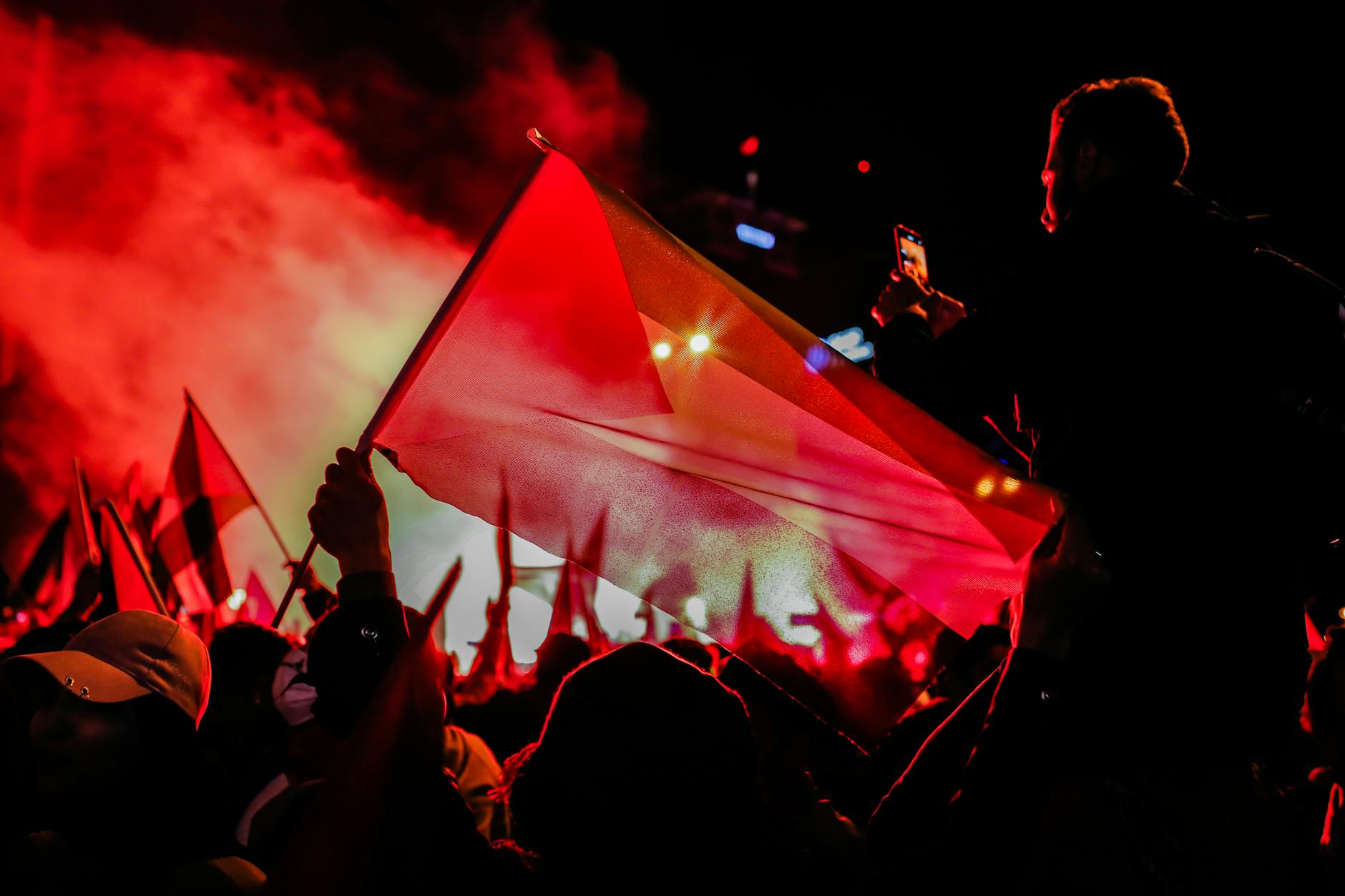
In the previous two iterations of the contest, participating countries were united in their unwavering support for Ukraine. In one of the darkest moments in modern history, Europe was lit up with blue and yellow lights. One would then expect there to a sea of red, black, and green in the Malmö arena this year. On May 11, the Palestinian flag will be waved on university campuses in every major city and on every social media platform, but at Eurovision, it will be nowhere to be seen.
The EBU has prohibited contestants and attendees from brandishing Palestinian flags, banners, or slogans this year to maintain their apolitical image. One flag allowed, however, is the Israeli flag. This blatant hypocrisy not only serves to whitewash the ongoing genocide but also reinforces the false narrative of Israeli victimhood. In their alleged neutrality, Eurovision becomes a stage for injustice, willingly taking a side while masquerading as impartial.
Why is it deemed radical to denounce genocide but acceptable to watch it unfold? Thousands of Palestinians lie in unmarked graves (if they even have that luxury), a third of Gaza’s infants cry out in hunger, and humanitarian aid has been severed. Yet within the Eurovision bubble, the chatter centres not on these atrocities but on the inconvenience of protesters dampening’ the show. For Eurovision fans, genocide is a mere price to pay for the glitter and glamour.
While these fans complain about the inconvenience of protests, Rafah, where more than half of Gaza‘s population is packed in the hope of escaping Israel‘s attacks, has received evacuation orders from the IDF. Experts claim this invasion will be the most fatal and dangerous attack the IDF has conducted in the last seven months, which will take place all while audiences are cheering on Israel in Malmö.
Amidst Eurovision’s celebration of music and ignorance, missiles and bombs will fall on Gaza like sympathies gone wrong. Palestinians will be dying. The EBU has long been picking at politically produced scabs and we have long been selling them the plasters. It does need to be questioned why only now we seem to care enough to consider action. While Israel, Azerbaijan, Turkey, and Russia have been hailed as fan favourites throughout the years, it’s high time we stopped being mesmerized by the shimmering allure of the stage. It’s time to stop dancing to the EBU’s tune and start demanding accountability.
A boycott would speak volumes, far louder than any song. The IDF’s deadliest weapon is our compliance, and pseudo-sympathy to the Palestinian people will only go so far if no action comes alongside it. It’s up to each fan to decide where they stand – in the glittering fantasy of Eurovision or the harsh light of reality. If we want to honour the competition’s alleged values of peace and unity, however, there’s only one path: to boycott.

Editor of the best section, features!!
Leave a Reply