
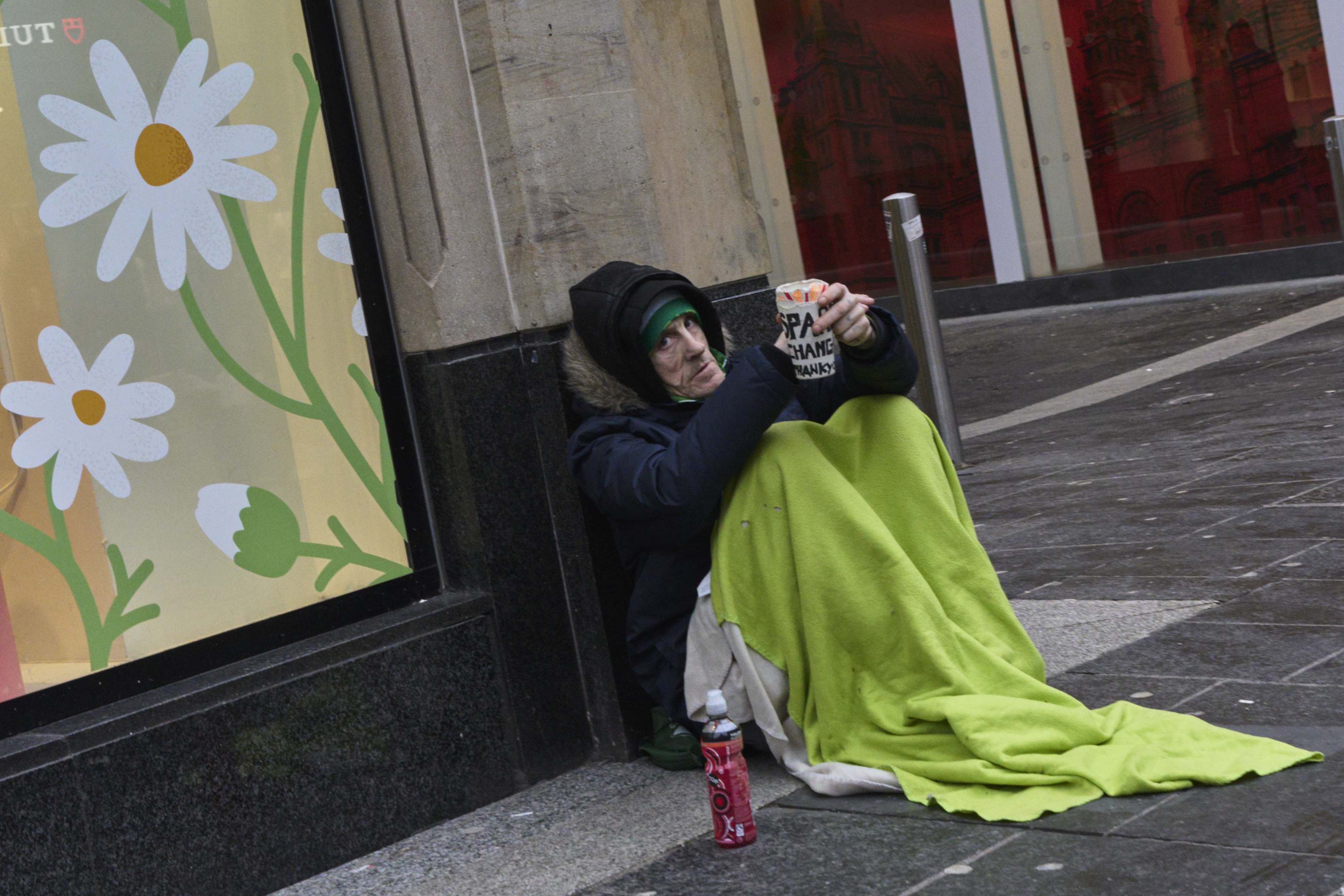
A homeless person asking for spare change in front of a shop in Glasgow, Scotland. Credit: Jason Fong / Strathclyde Telegraph
The number of people without permanent homes in Scotland has reached its highest level on record, with a sharp rise in families living in temporary accommodation over the past year.
Two years ago, ministers declared a national housing crisis. Scottish Labour blamed austerity and UK-wide budget cuts for what it described as the failings of the SNP government. Since that declaration, however, there has been little relief for those already homeless and at risk of losing their homes.
2025 saw a rise in the number of families living in temporary accommodation, up 9% on the previous year. Similarly, more households turned to local councils for emergency housing. At the same time, rough sleeping increased sharply over the course of the year, rising by 24% than the in 2024. Some individuals who were eventually offered temporary housing reported returning to rough sleeping, citing unsuitable conditions or a lack of stability.
The wider context has only intensified the strain. With the cost of living climbing steeply in recent years, more families are finding themselves unable to meet rent and household bills. The result is an all-time high in homelessness and growing political pressure at Holyrood.
Ministers first announced the housing crisis in 2024. Since then, the numbers have continued to edge upward. Earlier this year, First Minister John Swinney set out plans for a new National Housing Agency, “More Homes Scotland”, aimed at delivering large-scale affordable housing. The initiative is expected to begin in 2027 and forms a central pillar of the government’s longer-term housing strategy.
The proposal has drawn criticism. The Scottish Conservatives argue that the move amounts to an admission of failure. Shadow Minister Meghan Gallacher described it as “a damning admission that the SNP have created and entrenched Scotland’s housing emergency.”
Meanwhile, projections published last year suggested that more than 14,000 children were officially recognised as homeless. Shelter Scotland has labelled the current system “broken and biased”, calling for urgent legislative reform to prevent families from being trapped in temporary accommodation for extended periods.
The crisis has also become fertile ground for political challengers. Reform UK has sought to gain traction in Scotland by framing homelessness as a consequence of immigration pressures and disillusionment with the SNP’s record in government. The party claims its proposed strategy would free up housing and prioritise local communities, though critics argue its approach oversimplifies a complex issue rooted in supply shortages, rising costs and long-term structural underinvestment.
As the figures continue to rise, Scotland’s housing emergency shows little sign of easing as the political battle over who bears responsibility intensifies.

Hi! I’m Aaron and I’m in my 4th year studying Journalism and English. I’m really looking forward to contributing to the Creative and Culture sections of the Telegraph this year!
Leave a Reply