
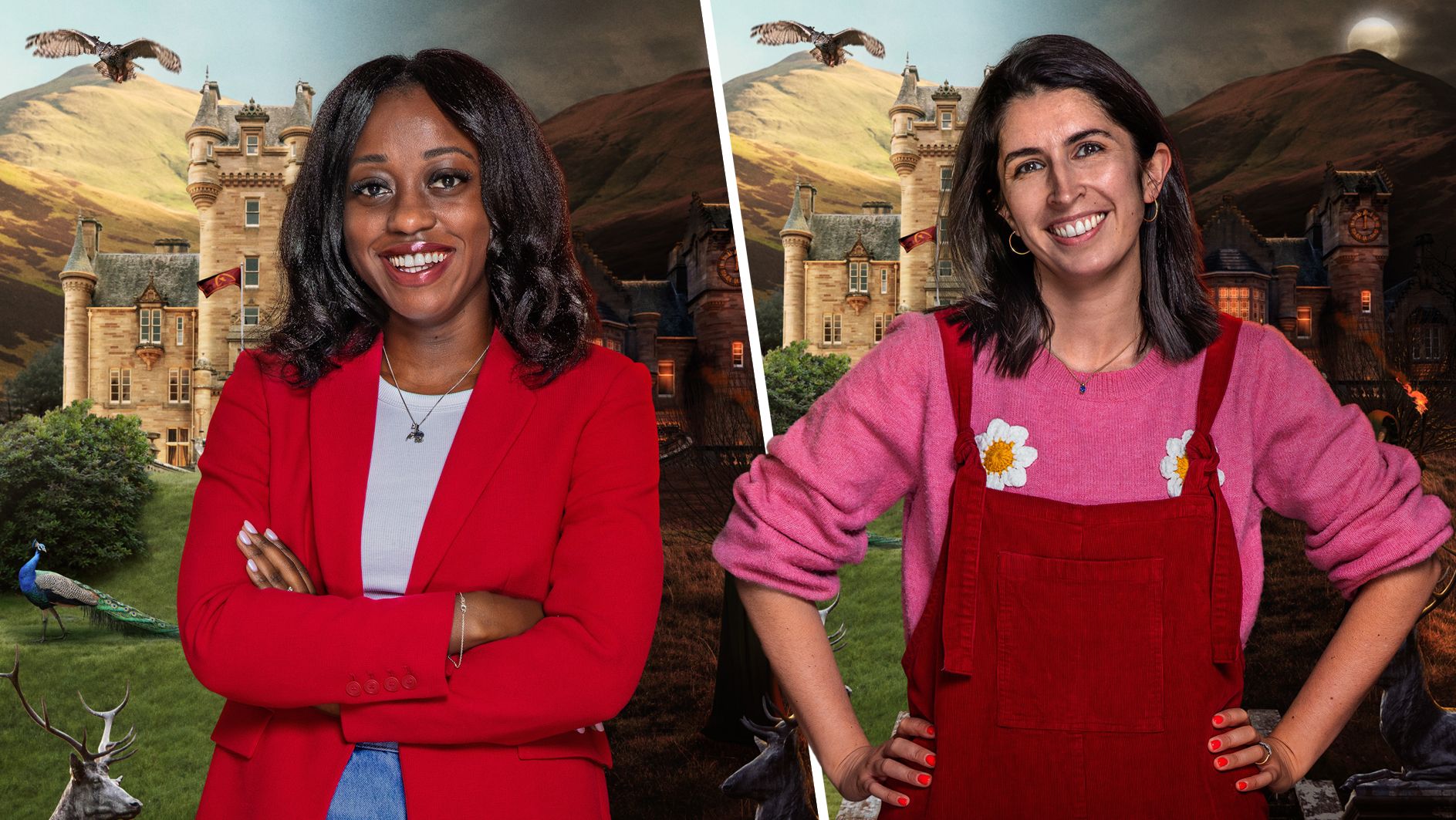
For the last four weeks, we have been hooked on the havoc that was The Traitors season three. A game of deception played out against the haunting backdrop of a Scottish castle. It had all the makings of a real-life Agatha Christie mystery—suspicion at every turn, betrayal thick in the air and twists waiting to happen. This is not a show about morality or the deservingness of the prize. It’s a game of lying and backstabbing—where winning requires the ability to lie to someone’s face without flinching. Yet, as the dust settled on this year’s finale, one thing became painfully clear: audiences are far more comfortable with certain kinds of treachery— and certain kinds of players.
This year’s season was steeped in the idea of ‘sisterhood.’ After the all-boys club in the turret last season host Claudia Winkleman tried to make amends this year by selecting all female traitors: Linda, Armani, and Minah. They vowed to stick together until the end pledging to stick together until the end. It was a bold promise, full of solidarity, but one that unravelled within just three episodes.
When two-thirds of the sisterhood were banished Minah had no choice but to recruit Charlotte, a 32-year-old born and bred Londoner, who decided the key to winning The Traitors was to… fake being Welsh. A curious strategy, predicated on the assumption that nothing inspires trust quite like a slight valley accent and a vague fondness for daffodils. It was unnecessary. It was ridiculous. It was, in its own peculiar way – genius. While the accent itself was questionable and shifted from Cardiff to Croydon as the season progressed it worked. She became the only player no one doubted, trusted before she’d even pulled out a knife.
Two episodes later when fan favourite Minah became a sinking ship, Charlotte pulled away the last lifeboat, planting seeds of doubt in other players’ minds about her loyalty and eventually had the final vote, sealing Minah’s fate of banishment. We, the audience, knew Minah wanted Charlotte to make it to the end with her, but how could Charlotte have known that? After all, the last two seasons had already been riddled with traitor-on-traitor betrayal. It was a move of survival, not malice.
Yet, instead of admiring her necessary move, the audience erupted in outrage, branding her “evil,” “a snake,” and, predictably, “a bitch” a modern-day equivalent of being burned at the stake. The attacks soon lost sight of the game and came for her appearance, her character, and – to the shock of no one – her life, with death threats soon popping up from incels on social media. These attacks, of course, all conveniently ignored the very essence of The Traitors: betrayal.
Strip away the noise, and it becomes clear that Charlotte’s real crime wasn’t her strategy—it was her gender. Perhaps the most telling part of the reaction lies in the comparisons, last season’s winner Harry left a trail of discarded Traitors in his wake: Miles, Ash, Paul, Andrew, Ross. Yet Harry was lauded as the best traitor to ever play the game, his cunning moves applauded as strategic brilliance. Social media was flooded with praise, with fans hailing him as a hero of deception. No one questioned his tactics, attacked his character, or analysed his looks. His role as a ruthless player was celebrated as part of the game because that is what it is – a game.
The forced hate train intensified when Charlotte pulled arguably one of the best plays the show has ever seen. In a moment of sheer brilliance, she recruited the faithful Freddie to join her ranks as a traitor, knowing full well that Leanne had immunity that night. Charlotte, fully aware Freddie was oblivious to this, convinced him to target Leanne in the murder attempt—making him look guilty and ultimately sealed his fate when he was banished later that day.

Image: BBC
Fuelled by spite and sexism audiences refused to acknowledge the genius of what she had just pulled. They ran to defend Freddie even though just an episode ago they hated him for coming at Minah, claiming he was a ‘victim’. They accused Charlotte of going “too far,” claiming she was being manipulative, all while conveniently ignoring that manipulation is at the very core of the game. It’s almost as if viewers expected her to play The Traitors without, you know, betraying anyone.
The same qualities that made her a brilliant Traitor suddenly made her a monster, because, in the court of public opinion, a woman with a plan will always be a sin. When Harry and Wilf manipulated the faithful, it was because they were “playing the game.” When Charlotte did it? Well, it was because that’s just who she is.
However, there has been a plethora of female traitors who managed to mostly sidestep the digital pitchforks Charlotte found herself chased by. Why? Because, despite being just as cunning, they played within the unspoken boundaries society sets for women. They played the game with just enough charm, just enough “likeability” never fully embracing the cold, calculating persona that being a Traitor sometimes demands. In season one Amanda and Alyssa, both Traitors, yet never traitorous to their own, didn’t backstab, didn’t try to seize control. They played with loyalty, as women are expected to. And when they fell, it wasn’t by their own hands but as collateral damage for a man’s win. Had they done to Wilf what he did to them, the narrative would’ve shifted entirely.
In the first season of the Australian version of the show, traitor Marielle faced hoards of online abuse for being gleeful in playing the game as it was intended to be played. Marielle, for most of her season, played a blinder, handing in two traitors early in the show and receiving a single vote for half of the season yet she was branded a ‘sociopath’ and ‘arrogant.’ Compare this to her fellow traitor, Nigel, who took just as much glee in backstabbing as Marielle but he was respected, his ruthlessness reframed as intelligence. No character assassination, no moral outrage—just a man doing what needed to be done. In a game built on deception, Marielle’s only crime was being a woman ‘daring’ to enjoy it.

Image: Channel 10
Audiences want women to play this game, but only within strict boundaries. Be strategic, but not too cutthroat. Be bold but not threatening. Lie, but don’t make audiences uncomfortable while you’re doing it. Contrast this with the treatment of Harry in season two who turned viewers’ hearts into double beds. He was gleeful in his murders basking in the destruction he left behind, never once hesitating to embrace the so-called villain role of the game, yet he was hailed as an exalted figure, whom future (male) players should match.
The only women to sidestep the mob were those who played the quiet game—polite, restrained, and perfectly inoffensive. Lisa from this season and Evie last year embodied the archetype of “acceptable” femininity, never too bold, never too outspoken, and certainly never daring enough to stir controversy. Women must play Tetris with their feelings—stacking every frustration, every flash of ambition, every unfiltered reaction into neat, invisible rows—because letting a single piece slip out of place is enough to make them lose.
Viewers were specifically sympathetic to Frankie this year who frequently referred to her children. She wouldn’t be worthy of sympathy if she had not had children. She was allowed to be slightly more emotional, to want to win—because it wasn’t really for her – it was for her sons. Had she played the same game without the constant reminders of her children, would the audience have embraced her so readily? Of course not. Women have to justify their presence, their desires, their drive. But slap the word “mum” on it, and suddenly, it’s noble. A woman wanting to win is greedy—a mother wanting to win is selfless. And that’s the only version of womanhood the public finds worth rooting for.
Of course, no one will come out and explicitly say they hated Charlotte because of her gender. That would be too blatant, too obvious. But the coded language, the veiled criticisms, tell a different story. The visceral hatred Charlotte faced had nothing to do with the game and everything to do with the fact that she was a woman daring to step out of the mould society built. A woman who plays with power, who betrays as good as the men, is almost always seen as a villain. That’s the dirty little secret everyone’s pretending not to see.
At its core, The Traitors is a show about betrayal. It’s not about who “deserves” the money or who’s the purest soul at the table. It’s doing whatever it takes to win. Harry and Wilf understood that in their respective seasons, and were memorialised for it. Charlotte understood it this season, and she was condemned. The double standard couldn’t be clearer. The public simply isn’t ready for women who betray like men.
Until the public can accept women who play the game as unapologetically as men, without having to tone it down, contestants like Charlotte will always be vilified for doing exactly what the show demands. The audience’s inability to celebrate her gameplay says far more about their biases than it does about her. The real Traitors this season weren’t in the castle. They were at home, watching, tweeting, and deciding that gameplay is fine in theory—just not when it’s coming from a (fake Welsh) woman.

Editor of the best section, features!!
Leave a Reply to JadeCancel reply