
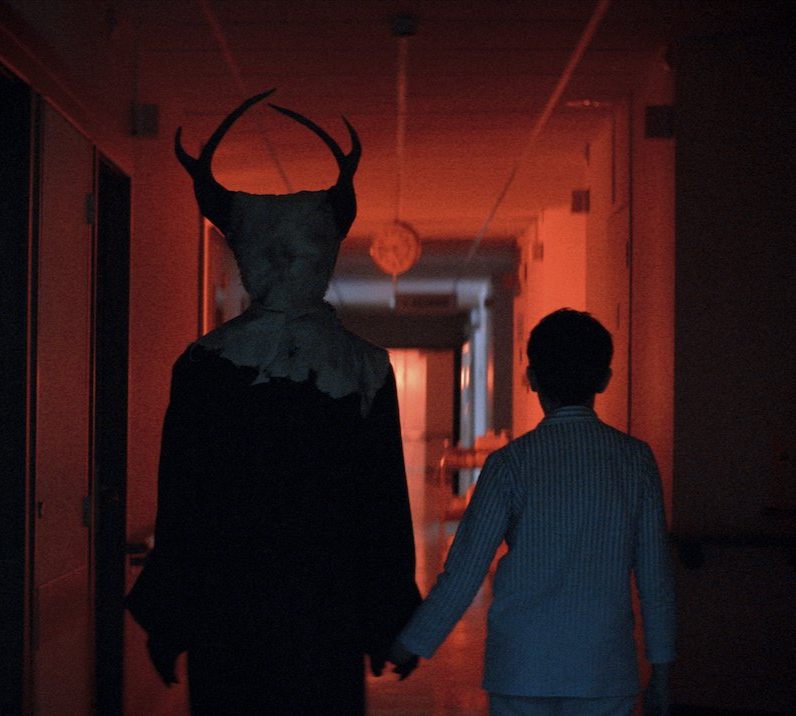
Kicking off Glasgow Film Festival’s FrightFest, The Soul Eater (or Le Mangeur d’Âmes) presents itself as a run-of-the-mill, folklore-turned-monsterflick horror. While it was full of monsters, it was anything but.
Unashamedly miserable and tackling uncomfortable issues, the film is just thriller enough to avoid the ‘torture-porn’ subgenre. Tonally, it is closest to Would You Rather – utterly devoid of hope.
While almost impossible to predict, this is often The Soul Eater’s biggest weakness. The ‘realism’ created by plot twists often makes the storyline too convenient, whilst still somehow managing to be completely unbelievable. The child victims are also despicable, making it impossible for the audience to root for their survival.
Elizabeth, played by Virginie Ledoyen, is the first protagonist, a disillusioned police captain getting back after a long break. Unfortunately, the script introduced her as cold and rude towards others, immediately making her unlikable. While she opens up later in the film and lets the viewer in on her tragic backstory, it is unconvincing and leads to nowhere for either her character or the plot. One positive, being that the film premiered on International Women’s Day, was that her character allowed it to pass the Bechdel test. Something much of the horror genre is yet to catch up on.
This poor character. Paul Hamy’s portrayal of Franck was not the most groundbreaking horror role, but he was the more interesting of the two protagonists. Despite giving the strongest acting performance of the film, his story had as much catharsis as the film gave its audience, leaving us grief-struck, tormented, and straining for closure. In the end he was mostly static, walking into the darkness as the same broken man he was at the start.
Sandrine Bonnaire’s Soul Eater was certainly memorable as a uniquely evil antagonist, however, she did not get the screen time to expose Elizabeth or Franck’s flaws, nor to become a truly compelling villain herself. She felt sidelined – thankfully, most of her violence was cut out of the movie – but this meant most of the horror came from the children, villainising the victims of atrocities and leaving a bad taste. These themes were handled infinitely better in Scott Derrickson’s Sinister.
This film’s only strained laughs came from its truly surreal climax. A combination of depraved violence, sexual gratification, and onlookers, the audience was a mix of awkward laughter, disgust, and surprise. That, like many scenes, was incredibly violent but used practical effects exceptionally well. As something this film excelled at, Olivier Afonso (who worked on films like Raw) deserves special recognition for producing excellent makeup effects. It did also give us a Braveheart moment of visible camera crew – which is always entertaining for me, as a viewer.
The Soul Eater had an audacious plot, impressive violence, and commitment to its tone. I also appreciated how it resisted the temptation to slip into the torture-porn genre. However, inconsistencies and troubling portrayals of child victims mean I cannot give it any more than one star. One viewer framed it best: “I like when my horror leaves the kids alone.” If you enjoyed films like I Saw the Devil or the gratuitous aspects of the Saw franchise (and can stomach strong themes of child abuse), then you might consider watching this nasty, French horror.
Leave a Reply