
The Campaign Against the Arms Trade (CAAT) released a study covering the University of Strathclyde’s ties to the ‘Military Industrial Academic Complex’ on 1 October. It comes as a companion to a broader study published in February of this year entitled ‘Weaponising Universities‘, which included case studies of Imperial College London, Southampton University, and Lancaster University.
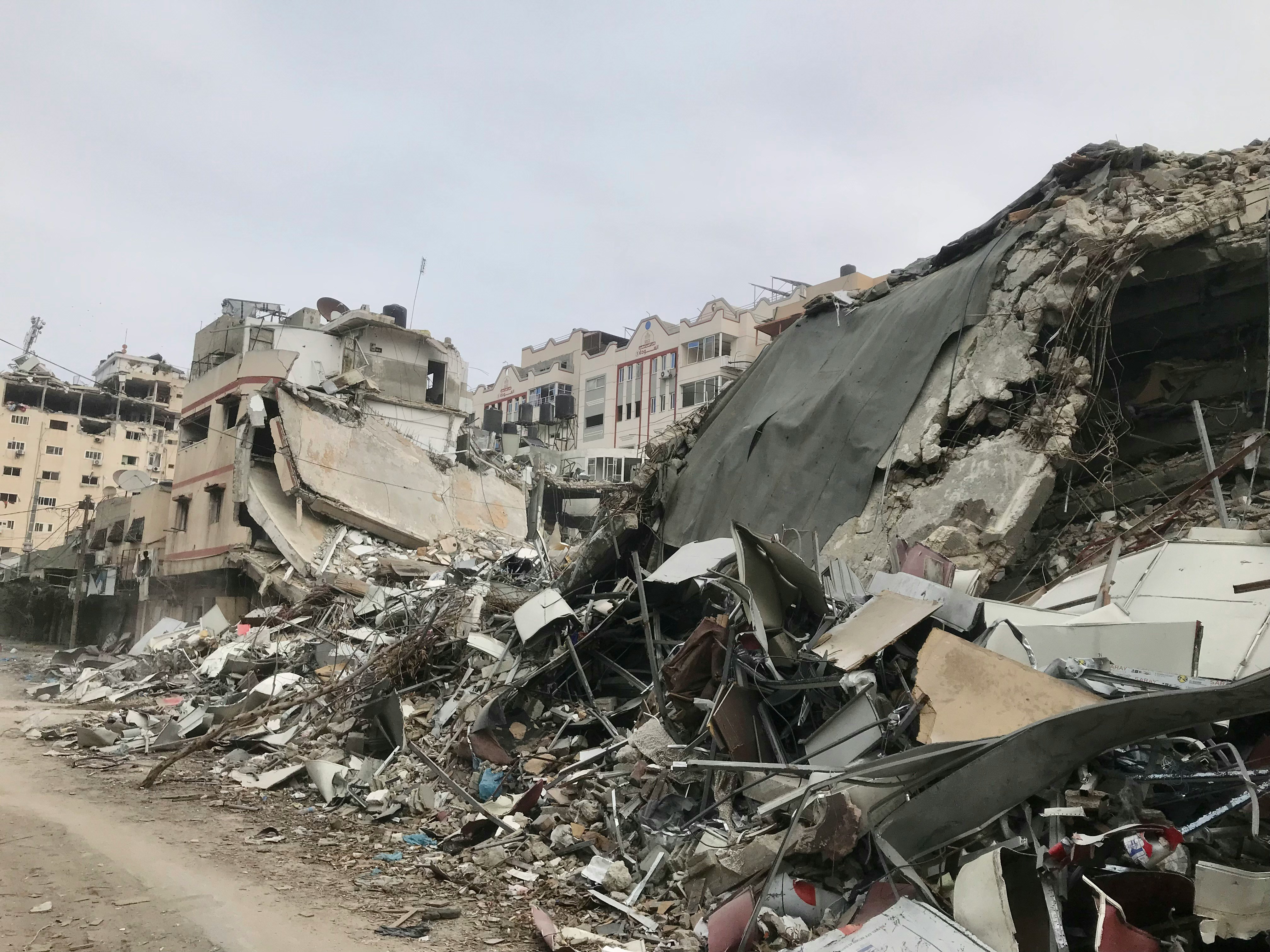
The new case study presents some interesting insights regarding the University of Strathclyde’s significant financial and research ties to companies like BAE Systems, Leonardo, and Thales, all of which have provided components and machinery for Israel’s ongoing siege on Gaza. This assault is one the International Court of Justice – tacitly or otherwise – accepted as a potential case of genocide back in May. The scope of the conflict has since escalated, now involving bombardment and a ground invasion of Lebanon, as well as attacks on UN peacekeepers, drawing Iran into the conflict and further destabilising the Middle East.
For those familiar with Strathclyde’s history, these ties will not come as a surprise. However, the findings of these two studies provide specifics regarding the two-way exchange of investment and scientific knowledge between the University and the defence industry, as well as placing this dynamic in an illuminating historical context.
Previous work by the Ferret revealed that both Strathclyde and Glasgow Universities had invested in BAE Systems, Thales, and Leonardo, with Strathclyde holding shares worth £514,200 in BAE and £137,653 in Thales.
CAAT’s new case study highlights that the University of Strathclyde has also received tens of millions of pounds in research and academic funding from the military and arms companies since 2016. This includes £13,440,192 from Rolls Royce, £11,535,245 from the Defence Science and Technology Laboratory, £3,504,836 from BAE Systems, £1,035,234 from the Ministry of Defence, and £338,563 from Thales. The University of Strathclyde is one of 90 organisations awarded a place in the £1 billion Hypersonic Technologies & Capability Development Framework, a program aimed at advancing the UK’s hypersonic missile technology, following Russia’s deployment of such missiles in Ukraine. The University has also contributed to the development of unmanned military vehicles.
The study claims that Strathclyde is involved in developing quantum technologies that ‘enhance detection and imaging capabilities on the battlefield.’ The argument in favour of these technologies is that they improve the accuracy of targeting and thus reduce civilian casualties. However, in practice, the information gathered from sensors often goes on to be processed by AI, to generate ‘kill lists’ such as those used by the Israeli Defence Force (IDF) in occupied Palestine. These systems are prone to automation bias and increased anonymity, convoluting the process of accountability for the human individuals taking advantage of these still-fallible systems – after all, it is not feasible to try an AI in a military court, while any soldier involved can shrug their shoulders and shift the blame to the technology when civilians die. The ongoing development of such systems raise concerns about their applicability to civil surveillance systems in the future.
The study also notes that Strathclyde has taken advantage of the Orion Laser Facility to investigate quicker triggering of nuclear fusion. This is a typical example of a dual-use military and civilian application technology, offering value both in simulating the conditions of a nuclear explosion (without actually causing one, which would violate the Comprehensive Nuclear Test Ban Treaty), as well as generating energy. Indeed, while some technologies are inherently dual-use, there are grounds to be critical about the naturalisation of dual-use functionality in the advance of technology. Firstly, since there is a huge amount of money available for research and development relevant to the arms sector, the direction of scientific research is generally more likely to be biased towards projects which can secure this funding – i.e., those with military applications. This dependency is especially pronounced given that universities have become increasingly privatised and subject to the caprices of the market in the preceding decades, even as arms companies continue to be heavily propped up by state subsidy. This is undoubtedly an economic rather than a scientific factor.
Secondly, the dual-use nature of technologies can be a useful ambiguity for companies, and universities, to hide behind – they can claim they are merely contributing to the advancement of science, or creating employment for their workers, and the military application is, to some extent, an inevitable by-product of this. Students should be highly sceptical of such a notion, given the figures presented in this study.
“This report highlights that our tuition fees are being used to fund the design and production of arms which are used globally to kill innocent civilians and escalate the climate crisis,” a spokesperson for the Strathclyde Palestine Society commented: “This runs directly counter to the University’s progressive claim.”
“Given the economic power of the arms industry, I think it was only natural that connections between the military-industrial complex and academia would form,” they continued: “However, we must also be conscious of the roles specific individuals have played, and ensure that the damage they have caused is not forgotten. For example, Jim McDonald was a pioneer in creating links between industry and academia, and prior to him becoming Principal, he was a powerful part of Rolls Royce – who are now the most significant contributor to the university in arms research grants, and produce for the IDF, among others, their fighter jet engines.”
They noted, however, that “a combination of work between the Strath Union president, vice presidents and groups such as ourselves, encouraging boycotts and creating a space for students’ voices to be heard, eventually resulted in the removal of Starbucks” from the Andersonian library, despite the University saying this was due to the company’s contract expiring, not any campaign by staff or students.
“The university management has shown they will listen to student demands, and whilst cutting these financial ties will take far more effort from students, we will undoubtedly be able to make them adopt more ethical policies – in fact some of the background work on this has already started. For this year, a primary aim is to send an open letter to the university, calling for them to divest from Israel and arms, and we will need as many student signatures as possible to make the biggest impact.”
“Students should join us because we offer a safe space to learn about Palestine, and express their emotions around the ongoing genocide.”
Strathclyde students have previously demanded an end to the University’s ties with BAE in 2009, following a prior military action by Israel against civilians in Gaza. Time will tell whether, and for how long, the University can continue this relationship in the face of increasingly egregious violations of human rights in Palestine, and in other parts of the world oppressed by the overwhelming military and technological might of aggressive regimes supplied by the UK arms sector.
Okopi Ajonye, author of the CAAT study, commented previously: “It is one thing to say universities shouldn’t do this, but they have been going through a major funding crisis for a long time. This dramatically raises the incentives of doing research and development for the military and arms industry and creates a vacuum the military and arms industry are trying to fill. It has created and is enabling conditions for that.”
The problem, then, must be understood on multiple levels. The crucial fact on which everything else depends is that the arms industry is lucrative: it is lucrative because there is a high demand from governments for military technology, especially, for example, those aligned with the neo-conservative outlook and strategic interests of the USA. If we are living in democracy, then it should follow that this high demand for the development of military technology from governments reflects a high demand for the development of military technology from the demos, the people. There are grounds, however, to be sceptical.
While there is evidence that the Ukraine war, for example, has caused a ‘rally-round-the-flag’ effect in many countries, leading to higher support for the nuclear deterrent across Europe, popular support for Israel and its genocidal adventuring are reaching an all-time low in the UK; currently, 49% of UK citizens support the suspension of some arms exports to Israel, versus just 26% opposed. It is precisely the grisly theatre of occupied Palestine which has been the laboratory for so much of the novel military and surveillance technology emerging from the arms sector; in the absence of a clear signal of consent for the UK’s ongoing complicity in this occupation from its people, and in the increasingly heavy-handed response of British law towards anti-war activism, we are faced with the prospect not only of a profound moral and humanitarian crisis abroad, but of a democratic crisis at home.
We should be concerned as taxpayers, as students, as citizens – and, above all, as human beings. Our government continues to support a regime increasingly condemned by nations on all sides of the great global axes of power, while funnelling public money into propping up the arms trade, a sector which it has failed to regulate effectively. This industry has proven itself to be morally unscrupulous even by the most hawkish of standards in its dealings with this regime, as well as with others like Saudi Arabia, which systematically murder vast numbers of innocent civilians – the death toll in Yemen has reached the hundreds of thousands, most of whom are children. Our tuition fees, meanwhile, are being paid to an institution which receives vast sums from, invests in, and funnels many of its students into careers in this sector.
Arms exports to Israel represent only a fraction of the UK’s total, the largest share of which goes to Saudi Arabia. However, the continued export of arms to both Israel and Saudi Arabia highlights the glaring inadequacies in the ostensible checks and restrictions on potential human rights violations associated with arms exports in this country, both by government and by purportedly ‘progressive’ universities like our own University of Strathclyde.
The export of arms to Israel by the UK is an important political signal. The diplomatic weight of the UK, who played an important role in the original Zionist project and continue to be one of its great advocates – despite growing murmurs of reluctance – should not be underestimated. The dependence of the arms trade on universities for innovation – just as the universities depend on it, in turn, for financing – is absolutely essential to its perpetuation. In the face of an ever-growing death toll in Gaza, which shows no signs of slowing over a year on from Hamas’ October 7th attack, both dynamics demand our urgent attention.
A spokesperson for the University of Strathclyde said: “As a leading international technological University that is socially progressive, our mission is to make the world better-educated, sustainable, prosperous, healthy, fair and secure.”
“There is no contradiction between our institutional mission and working with defence industry partners on research that contributes towards the security of our country and that of our allies.”
They continued: “All of our research is subject to risk assessments, ethical approvals and adherence to UK Government guidelines on national security, export control and the Academic Technology Approval Scheme.”

Interested in music and economic history
Leave a Reply