
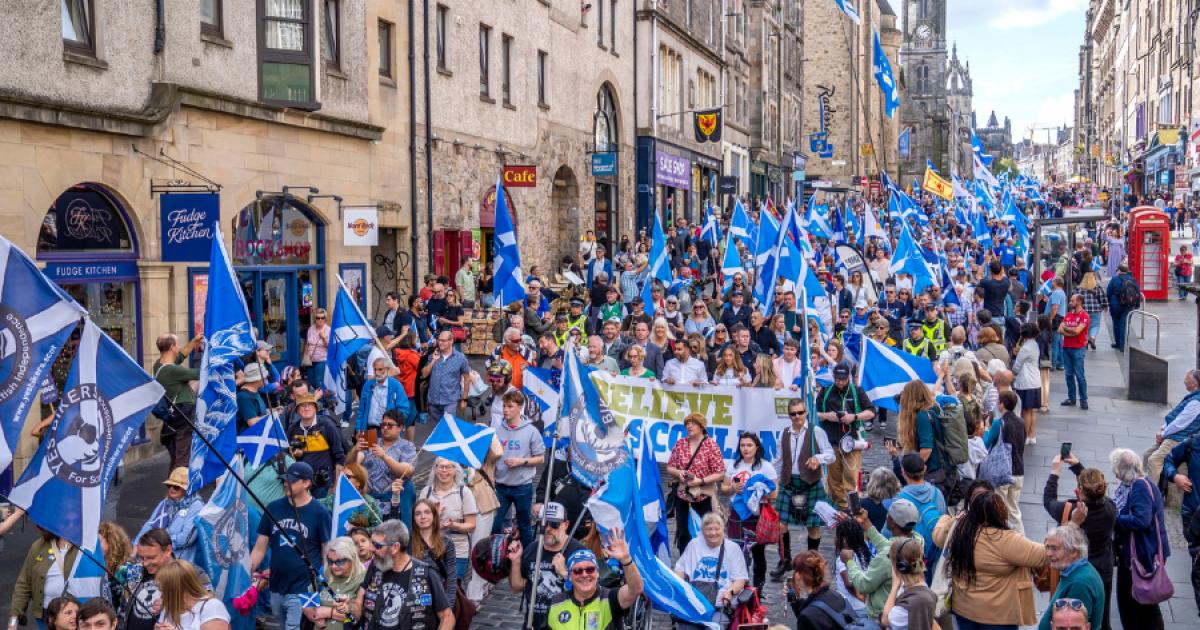
Experts believe that upcoming march for Scottish independence held in Glasgow on the same day as the coronation of King Charles III could hinder the public support for a second independence referendum.
Scottish independence pressure group, All Under One Banner, announced they will hold a march for independence on 6 May 2023 – the same day King Charles will be crowned.
The march will begin at Kelvingrove Park at 11.30am and end at Glasgow Green with speeches until 4.30pm.
SNP member, Rebecca Hunter, who intends to attend the march said: “People in Scotland are fed of pretending to care about people who don’t care about them.” She added: “It’s about time that family had a message sent to them.”
However, the message trying to be sent may backfire on the movement claims Dr Mark Shepard, senior lecturer of politics at the University of Strathclyde: “I think raising the issue is a vote loser [unpopular action] for those wanting independence.”
Referring to a March 2021 Opinium Poll, Shepard said: “If 19% of no voters want a republic and 29% of yes voters want a monarchy, and assuming the yes and no votes are neck and neck, it could be more problematic for Indy support than vice-versa.”
He added: “While 50% of yes voters want independence and a republic, 29% still want a monarchy, the rest being undecided. So, why rock the boat and divide the yes vote and risk independence over this issue?”
Hunter disagrees with Shepard’s hypothesis, claiming: “A decent sized proportion of yes voters are still undecided on the monarchy but I have no doubt the unending coverage of the Queen’s death will have made the case for a republic Scotland.”
She went on: “I think the march will make a point, that people in Scotland, pro-republic or not will agree with. That being, we are Scottish. The monarch is British, and we have a right to decide if we want that or not.”
Conservative MSP for the North East region, Maurice Golden, believes that the march will do little for the independence cause, claiming: “A coronation is such a rare and special moment that I suspect most people will be watching that and not paying much attention to an independence march.”
Golden also believes the message trying to be sent may not go down well saying: “The monarch is a unifying symbol that represents people of all political persuasions and in return finds support from people across the political spectrum.”
However, he is not against the march itself: “One of the greatest things about Britain is that people are free to express their views. Many people around the world aren’t so fortunate, and we should always cherish that British tradition of free speech. So, if independence supporters want to march on Coronation Day that’s up to them.”
According to YouGov, the king is liked by 44% of the general UK population whereas Queen Elizabeth II stood at 77%. Younger generations tend to like him less than older ones.
Shepard says this is as: “The monarchy played more into positive life experiences of the older generations. Recent scandals in the Royal Family have not helped this, and this is what younger people have experienced. The Queen aged with older generations, whereas younger generations are more distanced age-wise.”
Hunter said: “Young people like me, like to question authority and there’s no better authority to question than the monarchy. I believe more young people will attend on the day”
The march has already attracted over 600 people who are interested in attending from Facebook posts alone with many more expected to attend.

Editor of the best section, features!!
Leave a Reply