
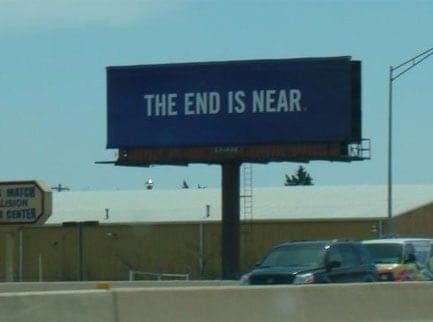
I will not be the first person to say that society has shifted towards the morbid, but there has been a definite change in how people are relating to the world around them. Society has begun to conversationally reflect the horrors being inflicted in the world. In such a turbulent global environment, I have noticed that existentialism and pessimism have worked their way into everyday conversation. An apocalyptic ideology has perpetuated most of our consciousness, which had previously been reserved for conspiracy fanatics and theorists. I have realised that the sense that the world is in a deep and perpetual state of danger is now the more normal mentality.
We are living with a unique combination of the boom of AI, wars across the globe, right-wing leaders and climate change.
New research published in the Journal of Personal and Social Psychology has found that a third of their US sample believed that the world would end in their lifetime. People across the sample believed that humans would play a part in our demise. The World Economic Forum has categorised global existential threats into five groups: economic, environmental, geopolitical, societal and technological. The study’s lead author, Dr. Matthew I. Billet, identified that the perceived closeness of the end of the world was affecting how people responded to global threats.
Overhearing several conversations in public caused me to reflect on how quickly these beliefs have found their place in everyday conversation. I have heard repeated sentiments, and whilst some have an apocalyptic view, most reflect the end of the world as we know it. From a study room in my university, on my placement at the Glasgow Science Centre, in a lift in an MSPs office, to among my flatmates in my living room, a sense of incoming destruction has become increasingly normalised.
Open-ended and ominous phrases like “it’s World War III” and “we’re all doomed” are paired with sincere concerns about safety and whether it’s morally forgivable to attend the World Cup in America.
The USA is central to a lot of the conversations I’ve heard, as if their shift towards fascism with Trump 2.0 is a tipping point for the entire globe. I’ve witnessed older people in my life who were usually less progressive, pass judgment on those going to America, a once popular holiday location. I’ve heard people find it difficult to imagine the USA of the past now and realise how far fallen within such a short amount of time after the shooting of two anti-ICE protestors in January.
With this cultural consensus, how will it affect the decisions the public makes? Will we have fewer children, become more politically active, cancel holidays or build bunkers?

She/Her
Leave a Reply