
Since the escalation of violence in Gaza on 7 October, global headlines have been dominated by a familiar tug-of-war over public attention, comparing Gaza and Ukraine in a baffling “battle” for public attention. In pitting two vastly different humanitarian crises against each other, some have argued that the recent media focus on the genocide in Palestine has taken attention away from the war in Ukraine.
Contrary to this belief, it is possible to hold space in our minds for more than one thing at a time – although perhaps this is more difficult for some than others. To insinuate that we as the public are unable to split our attention and understanding between a variety of global crises is frankly insulting. It’s not just insulting; it’s simply condescending. People can – and do – hold multiple truths in their minds without short-circuiting. Shifting focus across conflicts, from Gaza to Ukraine and beyond, does not lessen attention on any single issue. Instead, it deepens our understanding of global social injustices and reveals the interconnected nature of these issues.
News cycles tend to spotlight one crisis at a time, and the story receiving the most airtime often garners the most sympathy and support from the public. Yet, rather than detracting from Ukraine, the recent focus on the genocide in Gaza allows us lets us see the bigger picture: how Western military meddling is often at the root of these crises, creating cycles of violence, displacement, and immigration across borders.
Attention to multiple conflicts encourages the public to understand global patterns of injustice, adding layers to our understanding of social issues rather than simplifying them to single black-and-white narratives. The idea isn’t to “pick a side” but to see how these issues connect—and expose the very real, very avoidable causes of this pain.
When we look closely, we see that these conflicts aren’t isolated; they’re part of a complex, interconnected landscape of political power struggles, mainly attributed to the United States government’s military involvement in both Ukraine and the Global South.
“In the Middle East, Israel receives the vast majority of its advanced weapons from the U.S.
Greg Myre
Hamas in Gaza and Hezbollah in Lebanon used to fire short-range rockets that only threatened communities just across the border in southern and northern Israel”
Meanwhile, the recent U.S. elections have delivered an unmistakably anti-immigrant message. Yet, the U.S. government’s continued funnelling of weapons into the Middle East remains the primary driver of the displacement and migration that so many voters seem to fear. If they truly wanted to curb immigration, they’d start by addressing the root causes—the very military interventions that fuel it. So, the next time a voter complains about immigration, maybe they should take a minute to practice some critical thinking — displaced refugees are not the enemy. Perhaps it’s time to hold the government accountable for the consequences of their actions.
Alasdair Soussi notes that President Zelenskyy has raised concerns that Israel’s assault on Gaza has “muddied” Western efforts to support Ukraine—understandably, as Ukraine is heavily reliant on the United States’ military aid. But this argument overlooks the simplest solution: the United States could, and should, withdraw its military support for Israel. This is long overdue, especially in light of Israel’s disregard for the humanitarian crisis unfolding in Gaza.
The Biden administration has already threatened this after the Israel Occupying Force blocked humanitarian aid from entering Northern Gaza for two weeks. Some may argue that Israel’s continuous disregard for the deteriorating humanitarian conditions in Gaza warranted military withdrawal months ago. et, instead of taking meaningful action, the U.S. has only issued empty, hollow threats.
The only party to blame for any sort of ‘shift in attention’ is the United States Government. While Zelenskyy’s concerns are valid, they are not directed towards shared media attention and should not be perceived as such. While coverage naturally shifts from one crisis to the next, each focus adds layers to our understanding of global injustice rather than detracting from any single issue. The anti-immigrant, single-issue voters fail to consider this – likely the same people, considering their one-track mindedness, unable to fathom the idea that focusing on one humanitarian crisis does not in fact detract from the significance of another.
What’s more, while the crises in Gaza and Ukraine draw media attention, conflicts in the Democratic Republic of Congo (DRC) and Sudan continue in quiet agony, treated as background noise.
Jamie Shea highlights how Europe and North America are so fixated on Gaza and Ukraine that they’re blind to the escalating ‘second-tier’ conflicts. He’s not wrong—ignoring these growing crises comes with serious risks. But Western powers won’t take notice until the situation starts affecting them directly. Skipping attention today means a much higher cost tomorrow. But, of course, history’s never been their strong suit.
“It is worrying that Europe and North America seem only able to focus on Gaza and Ukraine, underestimating the geopolitical risks that these supposedly ‘second tier’ conflicts are generating…negligence and the inability to focus on more than one conflict at a time will now extract a higher price”
Jamie Shea
In the DRC, violence fuelled by decades of political instability and competition over mineral resources has uprooted millions. Despite being one of the world’s poorest nations, the DRC sits on a goldmine of exploited wealth, yet displaced locals are unable to access this wealth and are forced to work in inhumane conditions to mine the land for resources that will be used in the West.
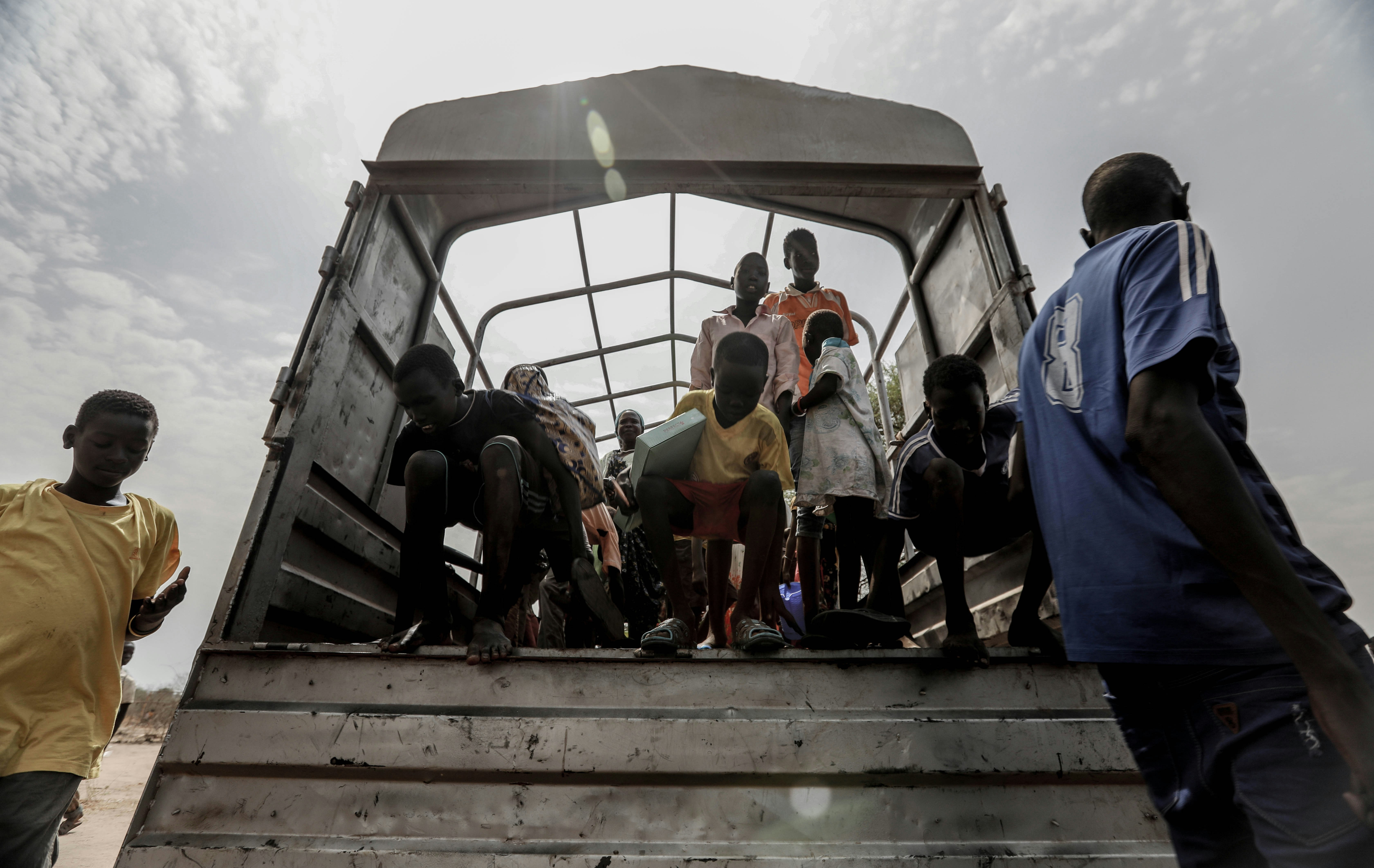
Sudan faces similar issues in terms of displacement and war. Nimco Ali writes that, “in just five years, Sudan has undergone a turbulent transformation from a dictatorship to a society wrecked by civil war, via revolution and a coup. It was in April last year that this devastating war broke out.”
In the months leading up to the start of Sudan’s war in April 2023, the United States was busy practicing false sympathies – mediating a so-called ‘framework agreement’ for civilian rule. However, these talks came to nothing as the war broke out, and the United States has been surreptitiously quiet in regard to the Sudanese humanitarian crisis.
Cameron Hudson, a senior fellow in the Africa programme at the Centre for Strategic and International Studies, said the problem with Biden’s approach “to Africa writ large” was that he raised expectations then did nothing to meet them.
Highlighting conflicts like these alongside more prominent ones like Gaza and Ukraine broadens our perspective. By paying attention to multiple regions simultaneously, we gain insight into the global patterns that drive these crises. The issues in Gaza, for example, are not isolated from those in Sudan or the DRC; they are all part of a global system that perpetuates violence and inequality.
Let’s stop pretending these crises are competing for our attention. Conflicts like those in Gaza, Ukraine, the DRC, and Sudan collectively aid our understanding of global social injustice. Rather than isolating each struggle, we can link them – dissecting the overlap of these issues to reveal the global superpowers that are truly to blame. Focusing on diverse conflicts doesn’t dilute support; it strengthens our collective resolve to seek justice across borders.

Creative Editor
Leave a Reply